

Quick summary
OutSystems offers two pricing tiers: Free (development only) and OutSystems Developer Cloud, starting at $36,300/year, priced on Application Objects consumed. But you might want to know what each plan includes, hidden charges, and why an alternative offers better economics for teams building commercial B2B software.
Evaluating OutSystems for commercial software development?
OutSystems is an established enterprise low-code platform ranked as a leader in Gartner's Magic Quadrant. Its visual development environment, deployment automation, and integration framework are real strengths for internal enterprise applications.
The $36,300/year starting price, however, excludes Application Object fees that compound as you ship features, compliance certifications sold as premium add-ons, and user scaling costs. For software companies building B2B products to sell, these hidden costs surface exactly when your product gains traction.
We break down OutSystems' actual pricing, where costs exceed the published rates, and how the economics compare for commercial software teams.
Why listen to us?
Launchpad runs production software for B2B companies like Fielo (serving Google and Audi), Quavo, and Connex.
With Launchpad, I created a product in about a month that would’ve taken six months to a year with a full stack team.
-Joseph Anderson, CEO, Connex
Built on Pega's 40-year workflow engine, we see software teams evaluate OutSystems regularly. We've also watched how Application Object models penalize feature development and where compliance costs surface unexpectedly. This gives us firsthand insight into where pricing models, architecture limits, and compliance expenses create challenges, and what companies actually need to build scalable B2B software.
What Is OutSystems, and who is it built for?
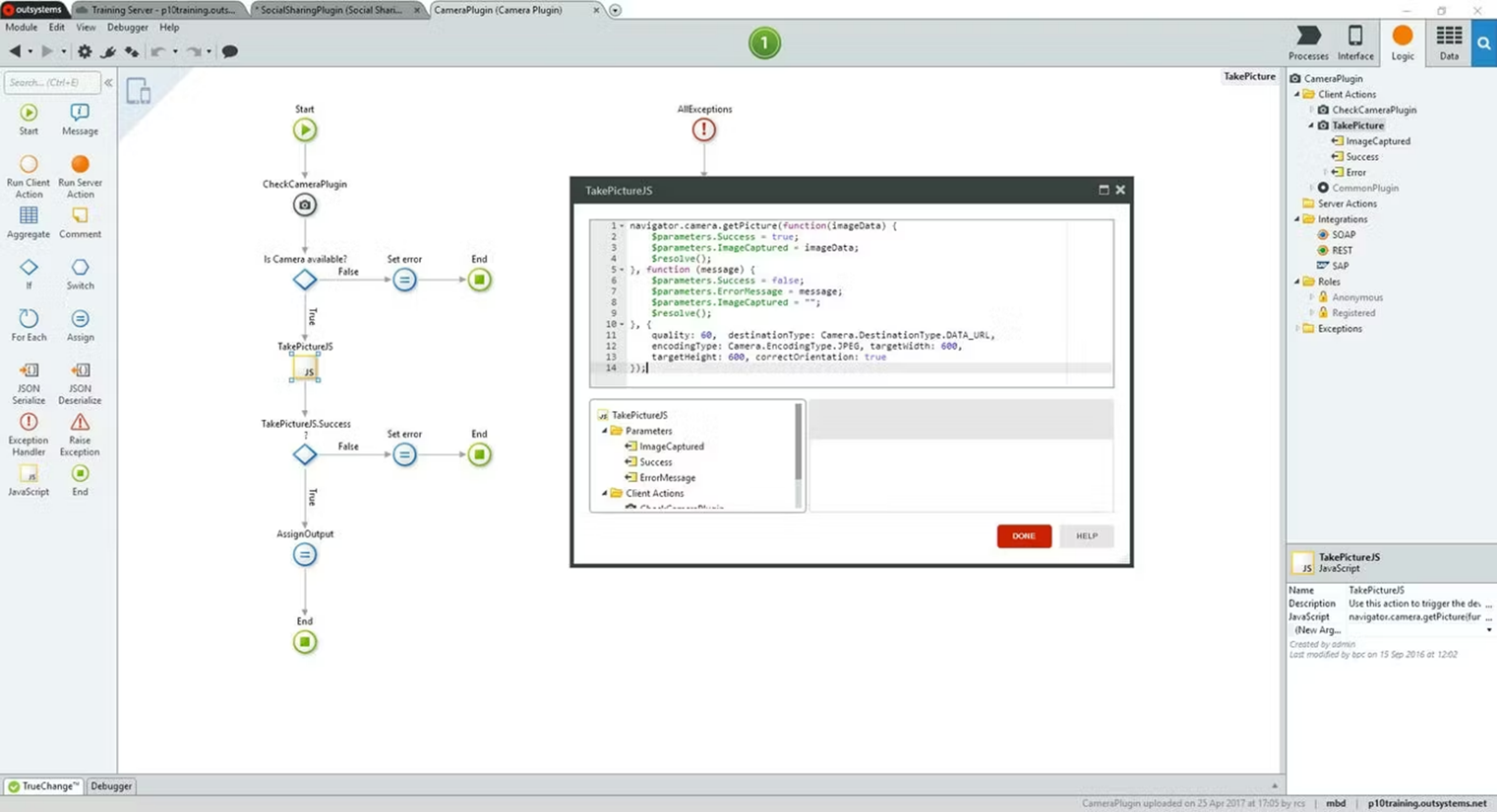
OutSystems is an enterprise low-code platform that lets teams build web and mobile applications through visual development. Developers use Service Studio to define data models, design interfaces, and configure business logic through drag-and-drop components. When visual tools aren't enough, you can extend applications with custom C# or JavaScript.
The platform generates .NET applications with a ReactJS frontend and a C# backend running on OutSystems Cloud (AWS infrastructure). Deployment options include OutSystems Cloud, self-hosted servers, or hybrid configurations. Moreover, the platform serves 85 million end users across 75+ countries.
Most OutSystems customers are large enterprises replacing legacy systems or building internal applications. OutSystems also runs an ISV program for software vendors building commercial products, though pricing operates on custom terms negotiated privately through sales.
OutSystems pricing plans compared
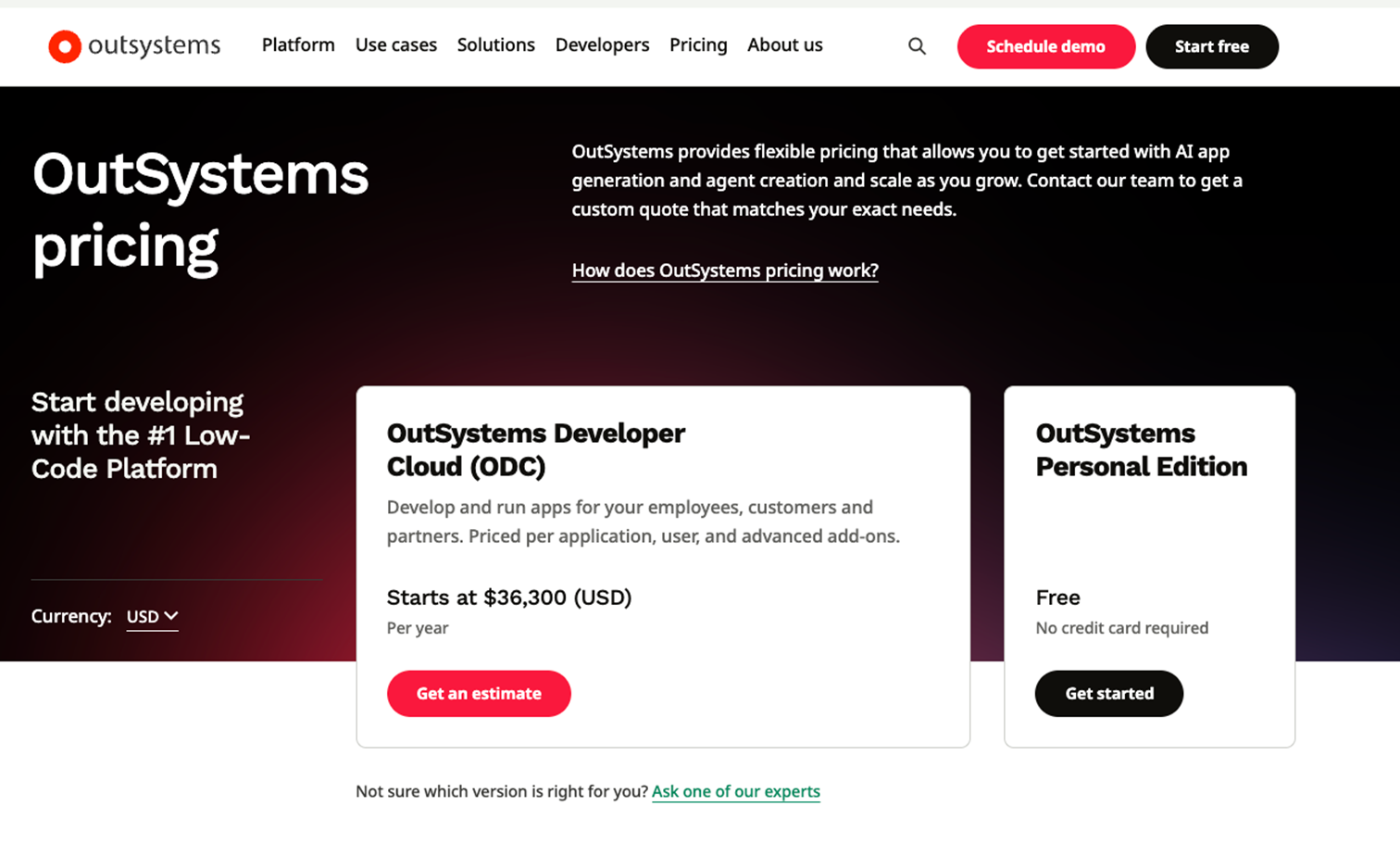
OutSystems lists two main pricing tiers publicly, though the actual costs become more complex once Application Objects and add-ons are included. Here’s what each tier costs:
|
# |
Plan |
Annual cost |
What's included |
Best for |
|
1 |
Free / Personal Edition |
$0 |
Development environment only, community support, 100 internal users, no production deployment |
Platform exploration and prototyping |
|
2 |
OutSystems Developer Cloud (ODC) |
$36,300 per year |
3 environments (dev / test / prod), ~150 Application Objects, 100 internal users, 8×5 support, 99.5% SLA, ISO 27001, OutSystems Cloud hosting |
Production applications |
Breakdown of each OutSystems pricing tier
Here’s what each OutSystems pricing tier will cost you:
1. Free/Personal Edition: $0
OutSystems' Free tier is a development-only environment. You get one non-production environment, community support through forums, and a cap of 100 internal users with no deployment rights to production. There's no time limit and no credit card required.
The Free tier lets you explore the platform and build prototypes, but it's not viable for any application you plan to put in front of paying customers. There's no SLA, professional support, and production deployment capability.
2. OutSystems Developer Cloud (ODC): Starting at $36,300/year
ODC is where OutSystems' pricing model becomes layered. The base subscription starts at $36,300/year and includes:
- Three runtime environments (development, testing, and production).
- Capacity for ~150 Application Objects (roughly one medium-sized application).
- 100 internal users.
- 8×5 professional support.
- 99.5% uptime SLA.
- ISO 27001 compliance.
- OutSystems Cloud hosting (AWS-based).
Unlike many low-code platforms, there are no per-developer seat charges. Unlimited developers can use the platform under a single subscription.
However, costs increase once your application grows beyond the base limits or requires additional capabilities. Common add-ons include:
- Additional Application Object packs: Sold in blocks of 150 AOs.
- HIPAA compliance: Requires the OutSystems Sentry add-on.
- Higher SLA tiers: Upgrading to 99.95% uptime costs extra.
- 24/7 enterprise support: Not included in the base plan.
- Additional runtime environments: Extra environments increase the subscription cost.
The legacy OutSystems 11 platform previously offered entry pricing at roughly half the current ODC starting point. This shift has been a point of frustration for some customers migrating to the newer architecture.
Features of OutSystems
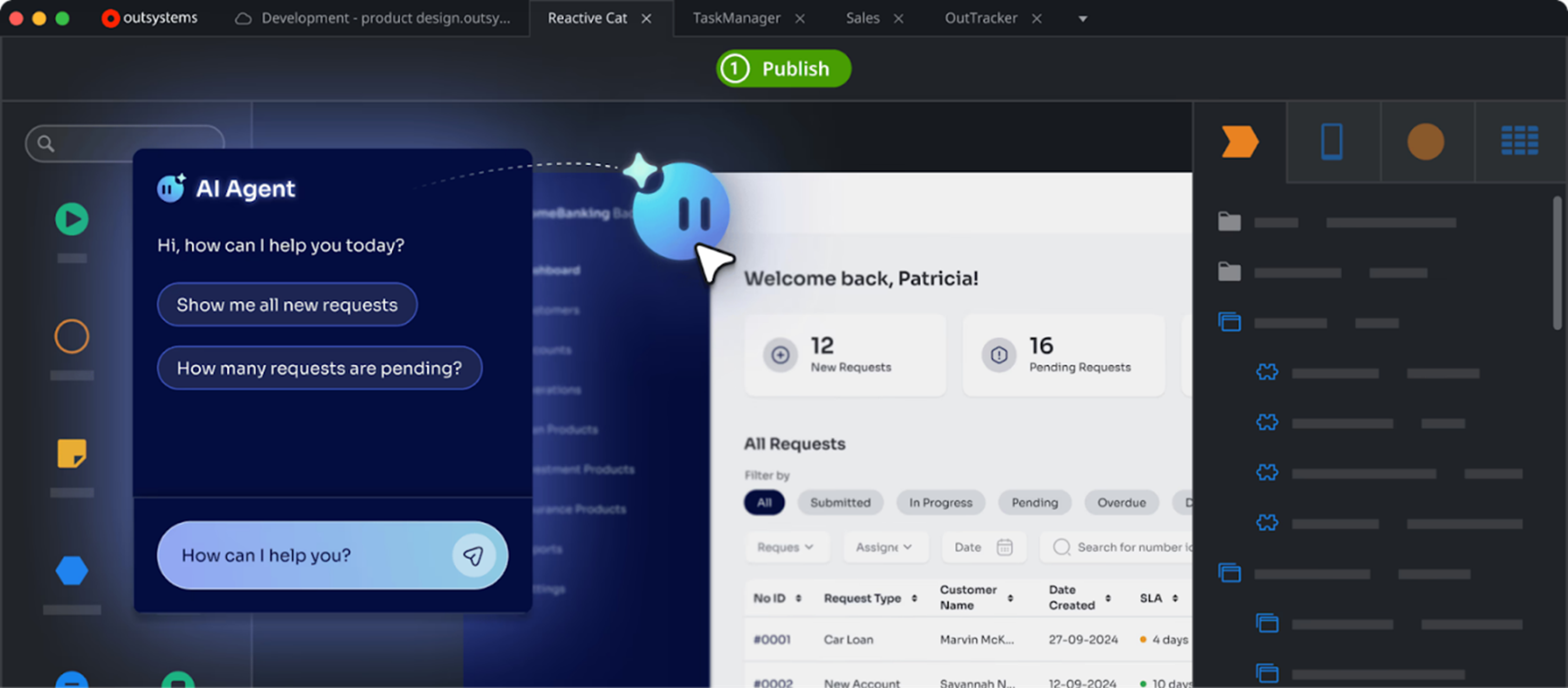
Pricing complexity aside, OutSystems delivers a capable development platform. Here's what draws organizations to it:
1. Visual development and code generation
Service Studio lets teams build applications by visually defining data models, screen flows, and business logic. OutSystems generates standard .NET applications with a ReactJS frontend and a C# backend. For teams comfortable with visual development, this compresses initial build timelines considerably compared to hand-coding every layer.
2. Integration capabilities and Forge Marketplace
OutSystems supports REST APIs, SOAP services, SAP connectors, and custom integrations through Integration Studio. The Forge marketplace offers reusable components and connectors built by OutSystems and its community. For standard business application needs, these pre-built integrations reduce development overhead.
3. Deployment automation and LifeTime management
OutSystems provides built-in CI/CD through LifeTime, its deployment management console. You can promote applications across environments, manage versions, and monitor application health from a central interface. The automated deployment pipeline also reduces DevOps overhead compared to managing deployments manually.
Hidden costs and pricing limitations of OutSystems
The pricing tiers on the OutSystems website are only the starting point. Once applications grow or enterprise requirements enter the picture, several cost layers appear that aren't obvious at first glance:
1. Application object limits penalize feature growth
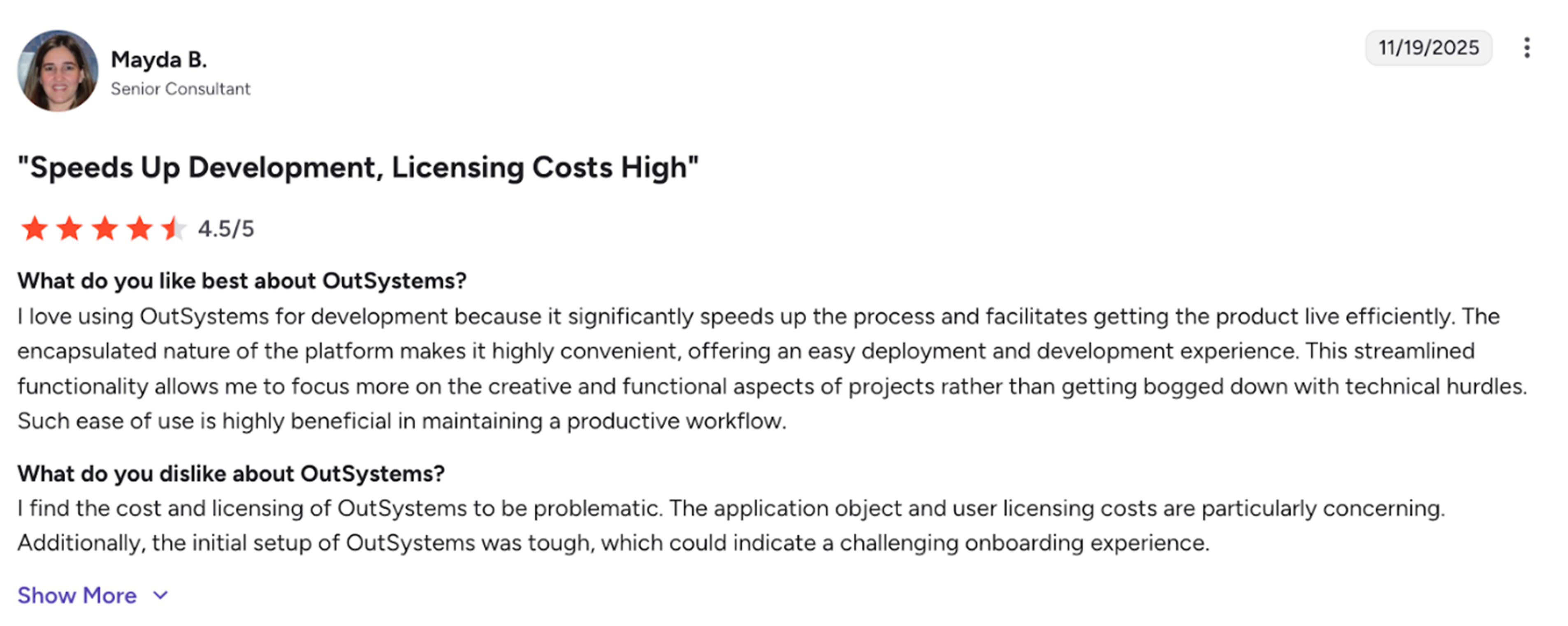
OutSystems measures application size using Application Objects (AOs). Each module, integration, workflow, or logic component contributes to the AO count. The base ODC plan includes roughly 150 AOs, which is typically enough for one medium-sized application. As new features are added, the AO count increases.
Additional AO capacity must be purchased in packs. For software products that evolve continuously, this effectively ties platform cost to feature development. But for B2B software companies that release updates often, this pricing model can create tension between adding new features and controlling platform costs. As the product grows, platform expenses can increase alongside development.
2. Pricing becomes less predictable as applications scale
The initial subscription price only covers the base capacity. As applications grow, additional costs can appear through Application Object expansions, additional environments, enterprise support upgrades, and compliance add-ons.
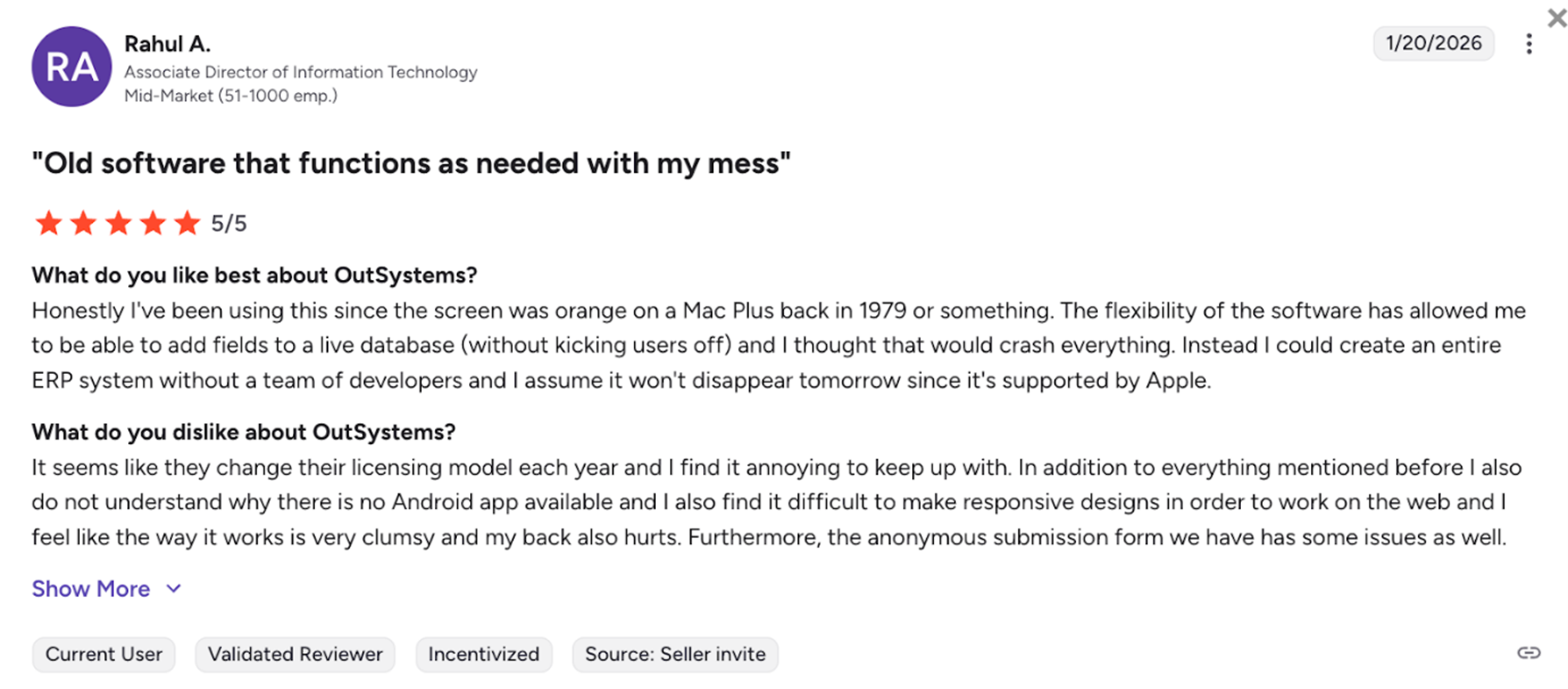
For organizations building internal tools with a stable scope, this may be manageable. But for software companies building products that expand over time, the long-term cost becomes harder to forecast.
3. Proprietary architecture creates long-term lock-in
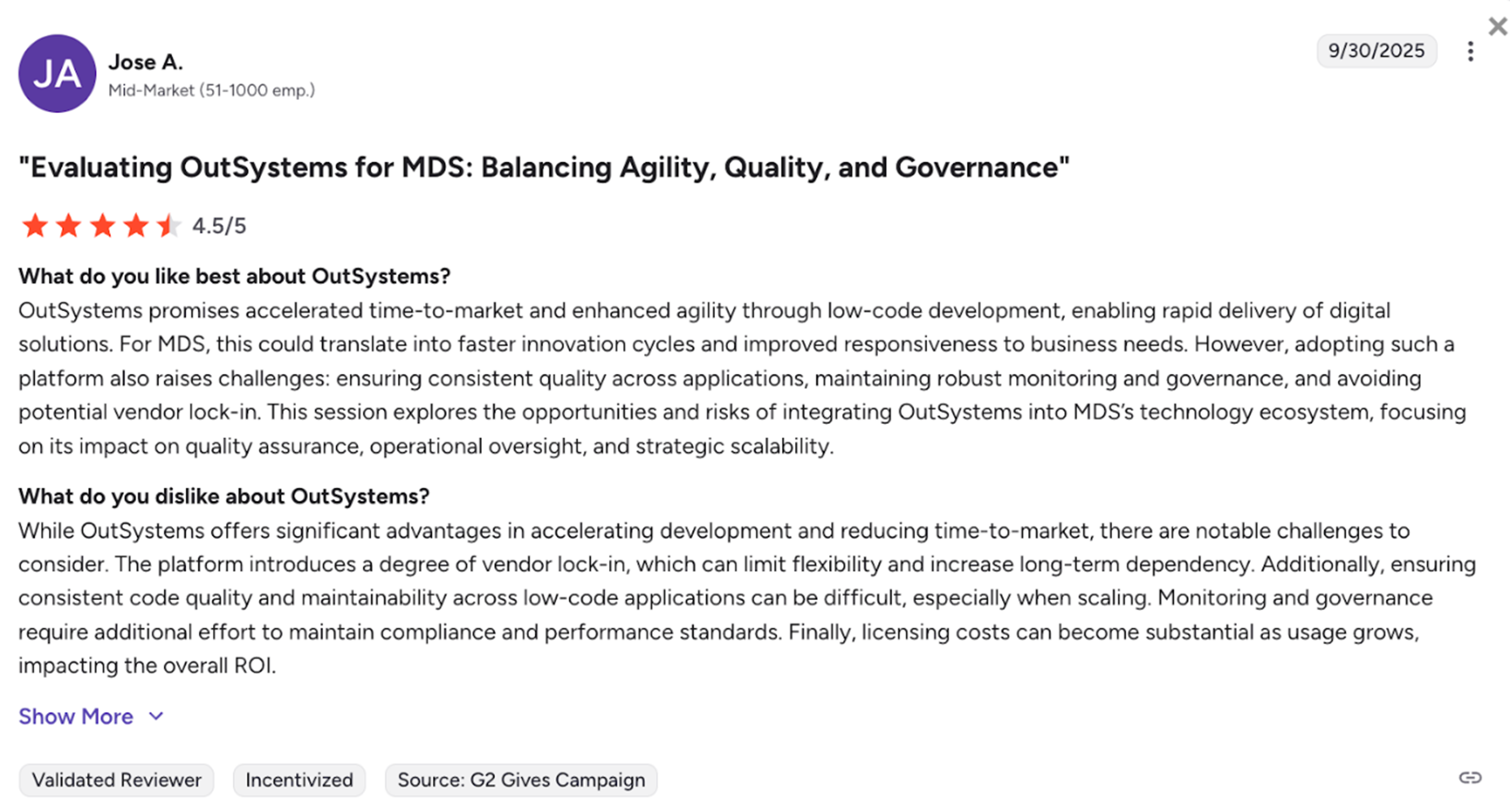
OutSystems applications run on a proprietary runtime built around visual models. While the platform allows custom code extensions, the underlying architecture is not portable to other frameworks. Moving an application off the platform typically requires rebuilding large portions of the application. For companies committing to the platform for commercial software, this lock-in can amplify the impact of pricing changes over time.
4. Testing and quality assurance require external tools
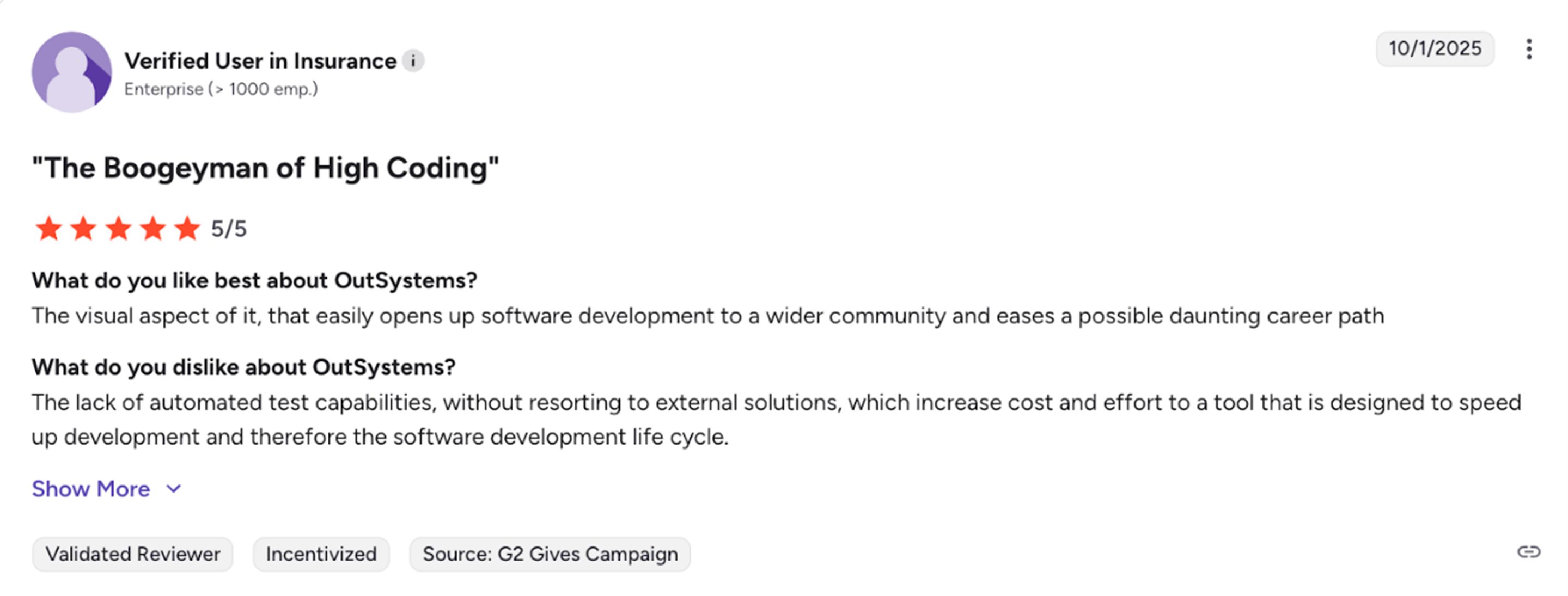
OutSystems does not include comprehensive automated testing capabilities in the base platform. Teams building production software typically need to integrate third-party testing solutions, which adds both licensing costs and integration overhead.
For software companies where automated testing is essential for shipping enterprise-grade products, these external tool costs become a mandatory add-on to the OutSystems subscription.
Why Launchpad is the better foundation for B2B software companies
Here's how Launchpad's platform economics and infrastructure design differ for teams building commercial software products:
1. Pricing scales with usage, not product complexity
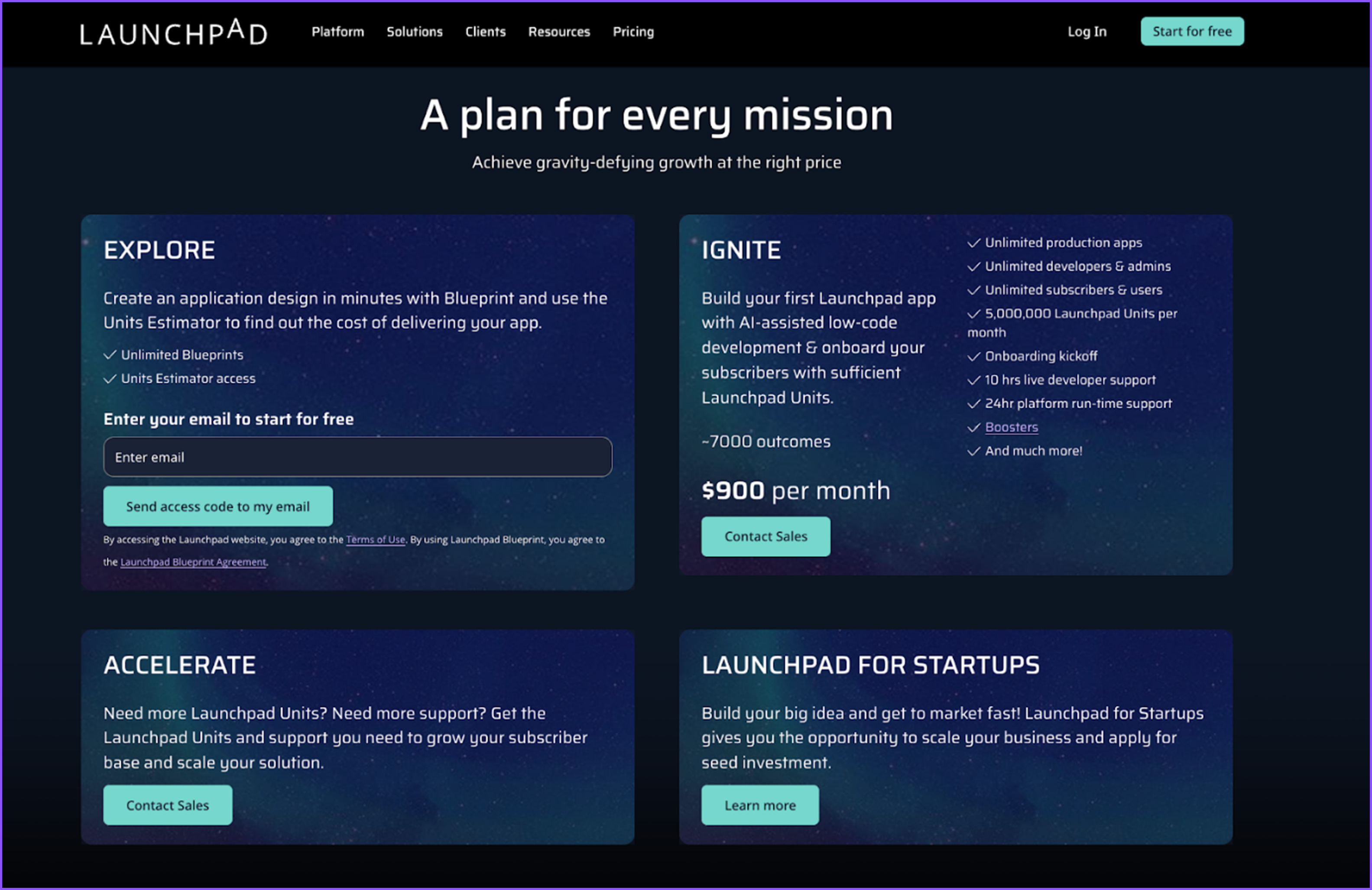
Launchpad uses consumption-based pricing measured in Launchpad Units (LPUs). Your costs track platform resource consumption, not how many features, screens, or API endpoints you've built. Shipping new functionality doesn't trigger licensing tier upgrades or require purchasing additional capacity packs. You start free with Launchpad Explore, then move to paid plans starting at $900/month as usage grows.
2. Compliance infrastructure is standard
SOC 2, ISO 27001, GDPR, and HIPAA compliance are built into Launchpad's managed infrastructure. You don't have to negotiate add-on packages for security certifications or pay extra for the compliance controls enterprise customers expect.
3. Multi-tenancy ships out of the box
Launchpad includes native multi-tenant architecture as a core platform capability. You don't need to implement tenant isolation manually or worry about cross-tenant data exposure in database queries. For B2B SaaS products serving multiple customers, this is foundational infrastructure included from day one.
4. Built-in workflow automation without custom development
Launchpad includes Pega's workflow orchestration engine as core platform infrastructure. You can design approval chains, multi-step processes, and business logic flows without writing custom backend code or integrating third-party workflow tools.
For B2B software products that require complex workflows (approvals, escalations, SLA management), this eliminates both the development time and the additional tooling costs.
5. Transparent economics for commercial software
Launchpad doesn't operate separate ISV pricing programs with undisclosed terms. You don't need to share revenue with the platform vendor or negotiate royalty arrangements. Platform costs are also usage-based and predictable, letting you model unit economics accurately from day one
OutSystems vs. Launchpad: a direct comparison
|
# |
Category |
OutSystems |
Launchpad |
|
1 |
Primary use case |
Internal enterprise applications |
Commercial B2B software products |
|
2 |
Pricing model |
Application Object-based with add-ons |
Consumption-based (Launchpad Units) |
|
3 |
Starting price |
Free (dev only), ODC $36,300+ per year |
Free Explore tier; paid tier from $900 per month; special pricing for startups |
|
4 |
Feature scaling costs |
Additional AO packs required as features grow |
No per-feature costs; scales with usage |
|
5 |
ISV / commercial pricing |
Undisclosed custom terms (ISV program) |
No royalties or revenue sharing |
|
6 |
Compliance certifications |
Base: ISO 27001 only; HIPAA/PCI require Sentry add-on |
SOC 2, ISO 27001, GDPR, HIPAA included |
|
7 |
Multi-tenancy |
Not available in ODC (manual implementation required) |
Built-in multi-tenant architecture |
|
8 |
Workflow automation |
BPT available (O11 only, not in ODC) |
Built-in Pega workflow engine (40-year platform) |
When platform pricing becomes a growth constraint
OutSystems pricing is built for internal applications. You pay based on Application Objects (features, screens, and APIs) and add compliance as premium upgrades, which means costs rise as your product evolves.
But Launchpad pricing is built for commercial software. You pay based on platform consumption with compliance included, which means costs scale with actual usage rather than product complexity.
The question isn't just which costs less upfront. It's whether you want a pricing model that penalizes feature development or one that scales with your success.
See Launchpad's full pricing and platform capabilities at launchpad.io/pricing.
Frequently asked questions
Does OutSystems charge per user?
OutSystems does not charge per developer seat. Unlimited developers can use the platform under a single subscription. However, the platform charges for end users. The base subscription includes 100 internal users, with additional users sold in packs of 100. While external users serving customers are priced separately.
What are Application Objects and how do they affect pricing?
Application Objects (AOs) are OutSystems' unit of application complexity. Each web screen, mobile screen, email screen, database entity, static entity, and individual API method counts as 1 AO. The base subscription includes capacity for approximately 150 AOs. While additional capacity is sold in packs of 150 AOs. This means adding features, screens, or API endpoints can trigger licensing tier upgrades.
Does OutSystems pricing include compliance certifications?
The base subscription includes only ISO 27001. HIPAA and PCI DSS compliance on OutSystems requires OutSystems Sentry, a premium add-on. It provides enhanced security features such as VPN connectivity, file integrity monitoring, antivirus protection, and 24/7 security monitoring.What is the OutSystems ISV program?
The OutSystems ISV program is for software vendors building commercial products on the platform. Over 160 ISVs reportedly use OutSystems, but none of the ISV-specific pricing is publicly disclosed. Terms are negotiated privately with OutSystems sales.
About the Author
Jason Masciarelli (VP, Launchpad Go-To-Market & Ventures) helps companies build new revenue streams by bringing powerful SaaS apps to market and leads the strategic investment into early-stage companies to accelerate growth and innovation.