

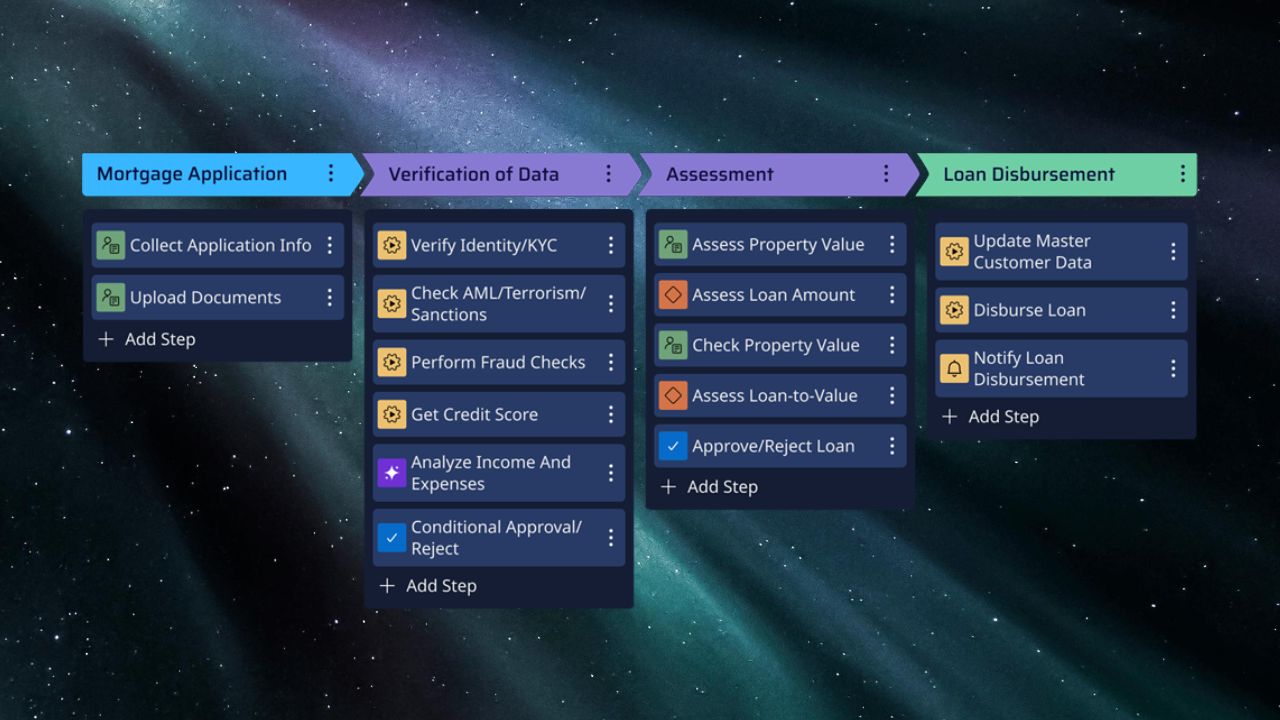
Many of you have these questions: Why do we start with Case modeling in Launchpad? What is a Case? Why does my application need Cases? This blog aims to clarify these questions and explain why Launchpad’s approach is so effective.
What is a Case?
In Launchpad, a Case is the foundation of how work gets done. Case Type is the rule which orchestrates the Case. Think of a Case as a smart container that holds everything needed to complete a piece of work—from the initial request to its resolution. Whether your organization is processing applications, onboarding customers, or resolving internal issues, a Case provides the structure, data, and workflow required for reliable, consistent task completion.
A Case is more than a simple task—it’s a structured object with a comprehensive data model that includes:
- All information required to complete the work
- A sequence of steps or actions to be performed
- Stages that group related steps for clarity and logical progression
- Rules and business logic that determine Case behavior
When a Case is created, it brings together everything the system and user need to keep work moving forward efficiently and correctly.
Analogy: the shipping container
To understand Cases, imagine a shipping container in global logistics:
- The container holds everything needed for a shipment (just as a Case holds all required data and steps).
- It follows a standardized process through ports, customs, and delivery (just as a Case follows its defined stages and steps).
- Checkpoints update the container’s status (just as a Case updates its data and progresses at each stage).
- Standardization enables scalability and efficiency (Cases offer the same benefits for business processes).
This analogy highlights how standardization, visibility, and predictability are essential for smooth operations across industries.

The image above visualizes a Case as a shipping container moving through defined stages—each stage representing a checkpoint in the process, ensuring clarity, progress tracking, and efficiency.
Real-world example: loan application
Imagine your organization handles loan applications. A customer applies for a loan through your website, or an agent enters the details. A Case is created, containing all relevant information: applicant data, requested amount, supporting documents.
The Case flows through defined stages such as:
- Application Intake: Gather applicant information, validate identity, automate data input.
- Credit Assessment: Perform credit check, calculate risk score, submit compliance comments.
- Offer Approval: Review application, meet lending criteria, generate loan offer.
- Documentation: Prepare documents, obtain signatures, summarize documents.
- Fulfillment: Disburse loan amount, notify customer, update loan records.
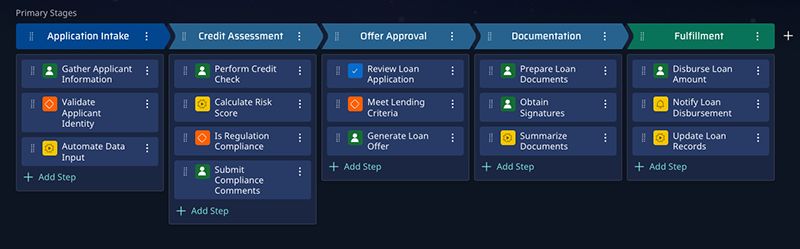
At each stage, the Case guides the system and users on required actions, captures results, and moves forward automatically when conditions are met.
Why this matters
By modeling work as a Case Type, Launchpad empowers solutions with:
- Clarity: Clear expectations to ensure everyone knows what needs to be done and when
- Consistency: Standardized processes to minimize errors and drive efficiency
- Visibility: Progress and outcomes are transparent at every stage
- Flexibility: Processes adapt seamlessly to evolving business needs
Whether you’re an admin streamlining operations or an end-user managing daily tasks, Launchpad’s Case-centric approach simplifies complex work and makes processes more manageable.
Regardless of whether an application is data-centric or UI-centric, it typically involves processes for capturing data or executing business logic. The initial step in Launchpad applications is identifying the process within the application. Once the case is defined, the next phase is establishing the case lifecycle, including its stages and steps.
From there, all associated data and user experience elements can be built using Launchpad’s powerful building blocks: datatypes, views, automations, decisions, and rules. This structured approach ensures flexibility and scalability while keeping complexity under control.
In summary, starting with Case modeling in Launchpad isn’t just a design choice—it’s a strategic foundation. By defining your work as Cases, you give your application structure, intelligence, and adaptability from day one.
Ready to simplify complex processes and deliver smarter solutions with Launchpad? Launchpad Blueprint uses AI to design app prototypes in minutes – including case design. See firsthand how a case-centric approach can orchestrate work for your clients and drive real business outcomes. Start for free and generate a Blueprint today.
About the Author
Ujjwala Ponduri is a Senior Solutions Architect with a passion for helping Launchpad clients reach their SaaS goals.