

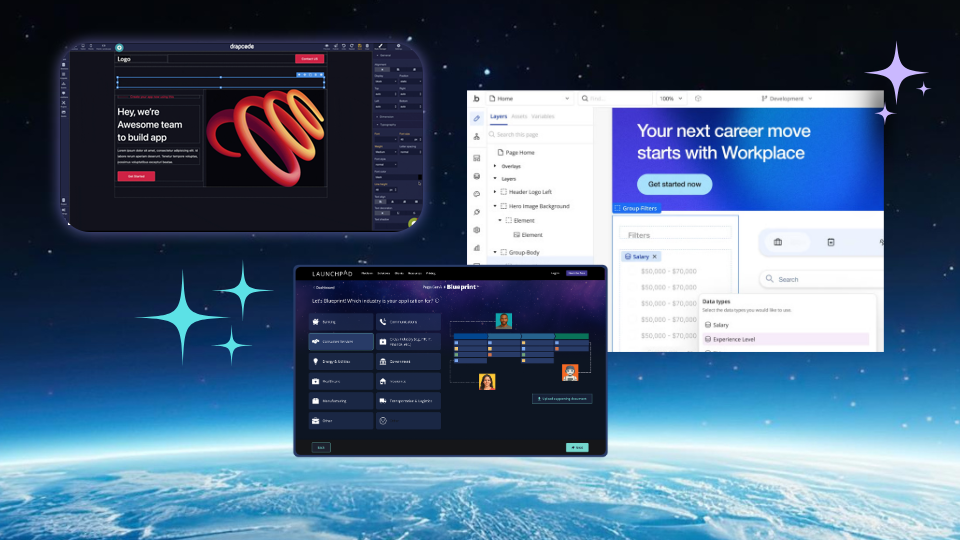
10 best low code and no-code app builders for fintech software teams: features, compliance & pricing compared
Quick summary
Fintech software teams struggle to build and ship regulated financial applications. This is because compliance requirements like SOC 2 and PCI DSS are costly and time-consuming to implement from scratch. Low-code and no-code development platforms solve this by providing built-in security certifications, workflow automation, and scalable infrastructure. So, teams can launch production-ready financial products faster without a full engineering rebuild.
Building fintech software without a full-stack team?
Financial software companies face a brutal contradiction. Financial institutions and enterprise buyers often require evidence of security controls, such as SOC 2 reports, while applications handling payment card data may also need to meet applicable PCI DSS requirements. But building compliance infrastructure from scratch consumes the engineering bandwidth you need for your actual product.
Low-code and no-code app builders promise faster development. However, most were designed for internal tools or MVPs, not commercial fintech products. This Launchpad guide evaluates 10 platforms from a fintech perspective. It focuses on regulatory readiness, multi-tenant architecture, workflow orchestration, and the production readiness of the output for enterprise buyers.
Why listen to us?
At Launchpad, we help B2B software companies build and ship production-ready applications on Pega’s 40-year workflow orchestration platform. Companies like Rules Cube use Launchpad to power fintech compliance and regulatory testing applications. Meanwhile, Fielo achieved 50%+ faster development timelines while serving enterprise clients such as Google and Audi. This gives us direct insight into what fintech software teams actually need from a development platform.
Had we decided to build TracEI from scratch, we would have had to build all of the case management and workflow automation capabilities from the ground up. We had a significant head start by using Launchpad.
-Andy Elliott | VP of Product Strategy, EvonSys
What is a low-code or no-code app builder for fintech?
Check out our article, Low Code vs No Code.
A low-code or no-code app builder for fintech enables software companies to create financial applications through visual interfaces rather than traditional programming. It handles the underlying infrastructure, so your team focuses on the business logic, compliance workflows, and user experience that differentiate your product.
Benefits of low-code / no-code app builders for fintech
Here are the benefits that low-code and no-code app builders are providing for fintech products:
Faster compliance-ready deployment
Traditional fintech development can require significant upfront engineering work around authentication, encryption, audit logging, infrastructure, and security controls before teams can focus fully on differentiated product features.
Lower development costs
Low-code and no-code platforms can reduce development costs by providing infrastructure, application services, and visual development capabilities that teams would otherwise need to build and maintain themselves.
Regulatory adaptability
Financial regulations change frequently. Visual workflow builders let teams update compliance logic, approval chains, and reporting rules without rewriting backend code or waiting in engineering backlogs.
Reduced time-to-market
B2B fintech buyers evaluate vendors quickly. The faster you ship a working product that passes security reviews, the sooner you generate revenue and validate your market position.
Feature comparison chart
The following is a short feature comparison of all 10 best no-code and low-code app builders for fintech, reviewed in the later section:
# | Platform | Best For | Starting Price | Free Plan | Compliance | AI Features |
1 | Launchpad | Enterprise fintech SaaS | $900 / month | Yes | SOC 2, ISO 27001, GDPR, HIPAA | GenAI Blueprint |
2 | Bubble | Full-stack fintech MVPs | $29 / month for Web Starter | Yes | SOC 2 Type II, GDPR/DPA | AI-assisted workflows |
3 | OutSystems | Mission-critical financial apps | $36,300 / year | Trial only | ISO 27001; SOC 2 | AI Agent Builder |
4 | Mendix | Enterprise fintech collaboration | €900 /month | Yes | Via deployment config | AI-assisted dev |
5 | Blaze.tech | Regulated industry apps | $1,500 / month | No | SOC 2 Type 2, HIPAA | AI app config |
6 | ProcessMIX | Banking & lending backends | Custom | Trial | Audit trails built-in | Private GenAI |
7 | Caspio | Data-heavy fintech dashboards | $300 / month | Trial | SOC 2, HIPAA, PCI DSS | AI assistant |
8 | FlutterFlow | Mobile-first fintech apps | $39 / month | Yes | Limited | AI code generation |
9 | DrapCode | Loan & borrower portals | $50 / month | Yes | SOC 2 Type 2 | Vibe coding AI |
10 | Appian | Complex process automation | Custom | Community Edition | SOC 2, ISO 27001, FedRAMP | AI Copilot, RPA |
The 10 best no-code and low-code app builders for fintech
Here are the 10 best no-code and low-code app builders for fintech, reviewed in detail. We’ve shared their features, pros, cons, pricing details, reasons for choosing them, and what customers say about them:
1. Launchpad
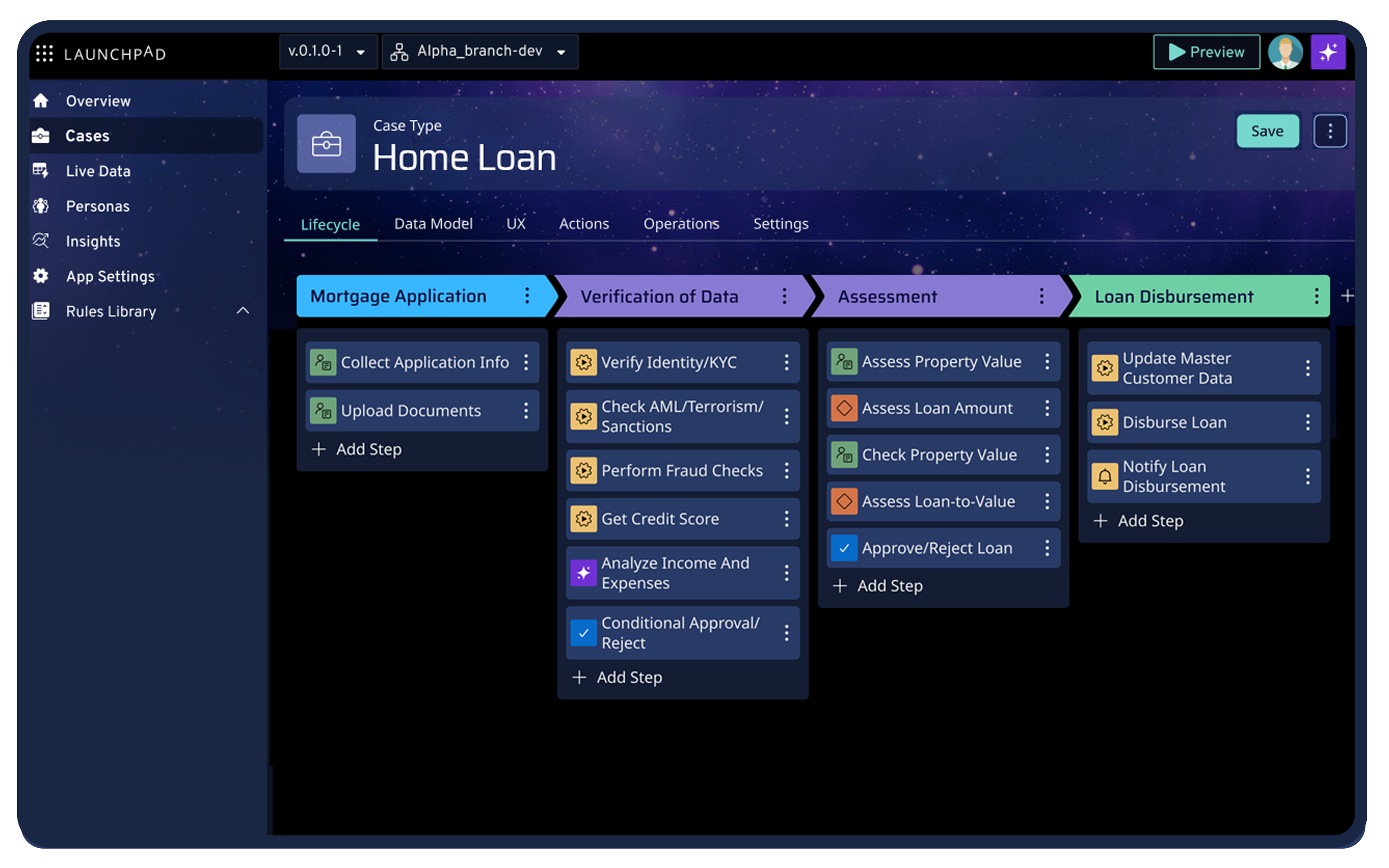
Launchpad is an AI-powered, low-code/no-code platform built by Pegasystems for B2B software companies that need enterprise-grade infrastructure from day one. For fintech teams, it delivers built-in multi-tenancy, workflow orchestration, and compliance certifications that most competitors treat as afterthoughts or paid add-ons.
Companies like Fisent use Launchpad to build regulatory compliance testing applications for financial institutions and ship production-ready products.
Key features
- Enterprise SaaS infrastructure: Built-in cloud infrastructure on AWS with multi-tenant isolation, identity management, security, and auto-scaling.
- GenAI Blueprint: AI-powered tool that generates initial application structures from descriptions, accelerating the design-to-development phase for financial products.
Pros
- Launchpad's managed infrastructure includes controls and certifications designed to support requirements associated with SOC 2, ISO 27001, GDPR, and HIPAA.
- Usage-based pricing model (AWS-style) that scales predictably as your fintech product grows.
- 43 years of Pega’s enterprise workflow expertise backing the platform’s orchestration capabilities.
Cons
- Still maturing in market visibility.
- Best suited for workflow-centric B2B software.
Why we picked this company
Launchpad is the only platform on this list combining no-code development with a fully managed, enterprise-grade runtime specifically designed for commercial B2B software. For fintech teams building products they plan to sell, the built-in compliance stack and multi-tenant architecture remove major barriers to market entry. These are often the most expensive and time-consuming hurdles when launching a product commercially.
What customers are saying
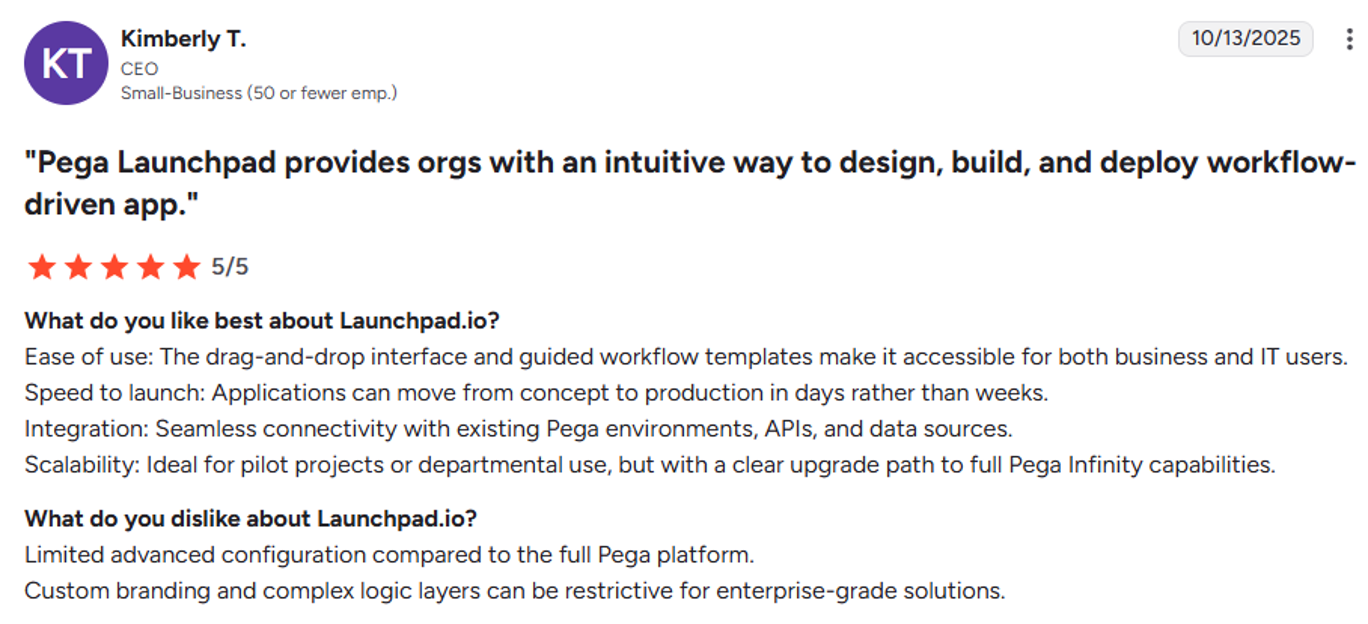
G2 reviewers highlight the speed at which production-ready applications are deployed and the strength of Pega’s case management architecture. One reviewer noted that Launchpad “combines no-code delivery speed with case-centric architecture control.”
Pricing
- Explore (Free): Access to the GenAI Blueprint design tool at no cost.
- $500/month plan for eligible startups
- Plan starts with Ignite: $1000/month with 25,000 Launchpad Units, unlimited apps, and users.
2. Bubble
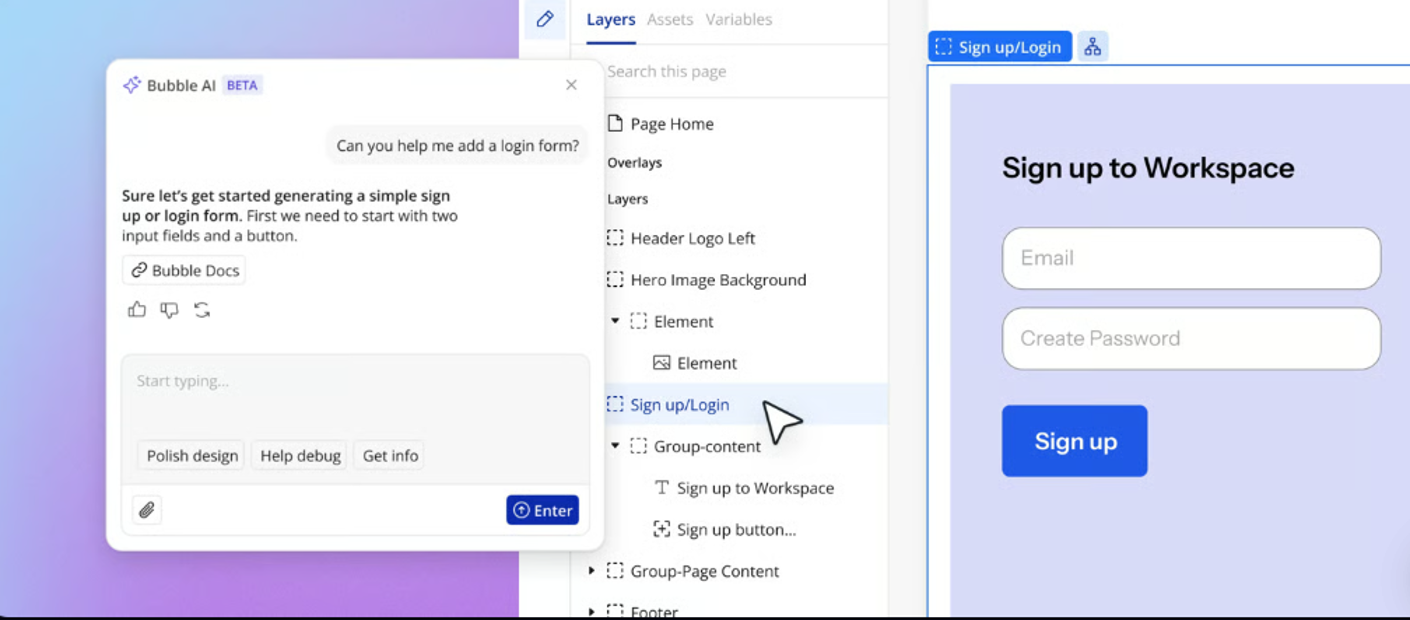
Bubble is the most flexible visual app builder for creating full-stack web applications without code. Fintech startups use Bubble for lending platforms, payment dashboards, and portfolio management tools due to its deep Stripe integration and plugin ecosystem.
Key features
- Visual full-stack development: Drag-and-drop interface for building frontend, backend logic, and database in a single environment.
- Plugin Marketplace: Hundreds of plugins for payments (Stripe, PayPal), KYC verification, document signing, and financial data APIs that extend Bubble’s native capabilities.
Pros
- Most flexible visual builder for complex web application logic and custom UI design.
- Free plan available for prototyping and testing fintech concepts.
- Large community and plugin ecosystem with fintech-relevant integrations.
Cons
- No PCI DSS compliance
- Workload unit pricing can spike unpredictably as financial applications scale.
- Multi-tenant architecture requires manual planning and careful database design.
Why we picked this company
Bubble earns its place for pure development flexibility. If your fintech product requires highly custom UI and complex logic that other no-code builders can’t handle, Bubble gives you the most control. The tradeoff is that compliance, security, and multi-tenancy are your responsibility to implement, not platform defaults.
What customers are saying
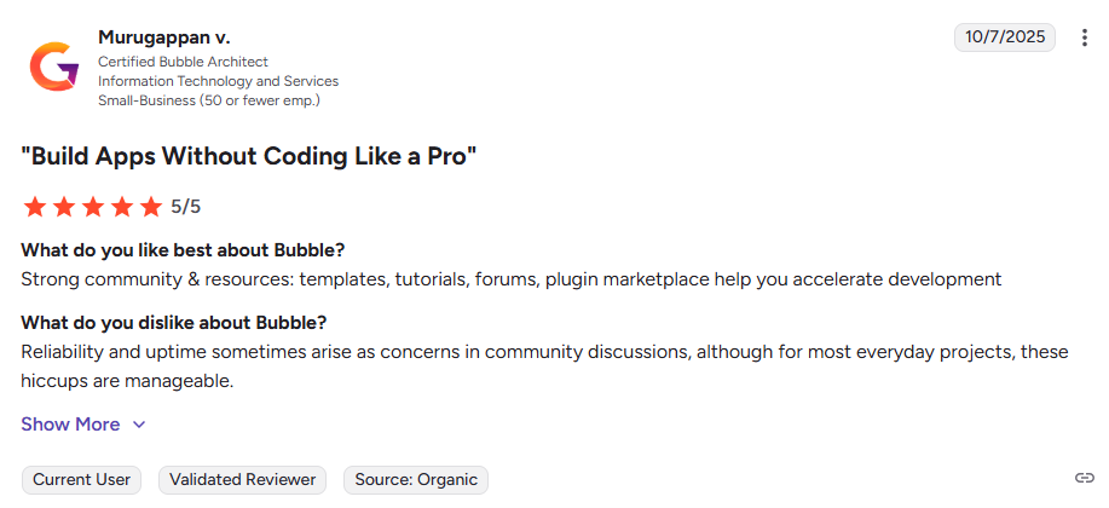
G2 and GetApp reviewers praise Bubble’s flexibility and the ability to build complex applications. Common complaints include unpredictable costs as the workload increases and a steep learning curve for advanced features.
Pricing
- Free: Prototyping only, Bubble subdomain, 50K workload units.
- Starter: $29/month (web), custom domain, 175K workload units.
- Growth: $119/month (web), 250K workload units, premium version control.
- Team: $349/month (web), 500K workload units, sub-apps, 5 editors.
- Enterprise: Custom pricing.
3. OutSystems
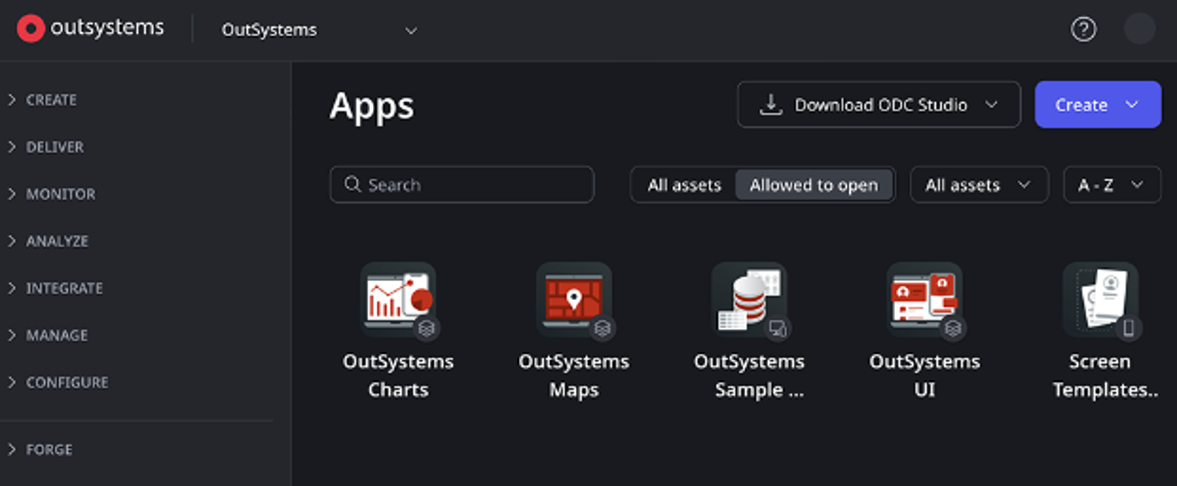
OutSystems is an enterprise-grade low-code platform used for mission-critical applications. The platform gives fintech teams the scalability and performance that visual-only builders struggle to match.
Key Features
- Full-Stack Code Generation: Visually built applications compile into standard C#/.NET + HTML/JS/CSS, producing production-grade output that meets enterprise performance requirements for high-transaction fintech systems.
- AI Agent Builder: Lets teams build and orchestrate AI agents within applications, enabling intelligent automation for fraud detection, risk assessment, and customer service workflows.
Pros
- Generates production-ready code that compiles to standard frameworks for long-term maintainability.
- Strong governance and DevOps tools for regulated financial environments.
- Deployment flexibility across cloud, on-premises, and hybrid infrastructure.
Cons
- Steep learning curve that requires developer experience.
Why we picked this company
OutSystems makes the list for one simple reason: Large financial institutions trust it for high-volume, mission-critical applications. If your fintech company targets enterprise banking clients and needs a governance framework that matches, OutSystems delivers. For earlier-stage teams, however, platforms like Launchpad offer comparable enterprise-grade compliance at a fraction of the cost.
What customers are saying
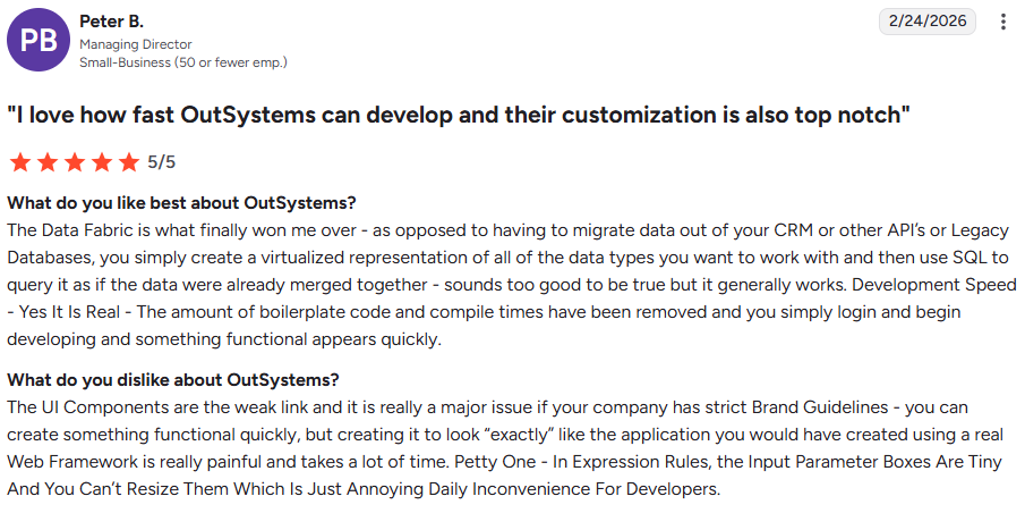
Reviewers on G2 and SoftwareAdvice consistently praise OutSystems for rapid development speed and robust deployment tools. The most common criticism is pricing, which multiple reviewers describe as prohibitive for smaller organizations. Some users also note that the Application Objects-based licensing model can lead to unexpected cost escalations.
Pricing
OutSystems Developer Cloud: Starting at $36,300/year, includes 3 runtimes (dev, test, prod) and 100 internal users.
Free Trial Details
Yes. Free plan available for exploration.
4. Mendix
Mendix bridges business and technical teams with dual development environments: a web-based studio for citizen developers and a desktop IDE for professional engineers. Financial services companies use Mendix to modernize legacy banking systems and build customer-facing portals.
Key features
- Multi-Cloud & on-premises deployment flexibility: Mendix supports deployment across public clouds (AWS, Azure, Google Cloud), private clouds, on-premises infrastructure, and Mendix's own managed cloud, all from a single codebase.
- ISV program for software companies: Dedicated pricing and partnership model for independent software vendors building commercial products, including royalty-based licensing designed for B2B fintech companies.
Pros
- Cloud-native architecture, combined with Git version control, supports proper fintech development workflows.
- Strong cross-platform support with one codebase deploying to web and native mobile.
- ISV program for software companies building commercial products.
Cons
- The standard plan starts at €900/month, plus per-user fees, making the total cost difficult to predict.
- Compliance certifications depend on deployment configuration rather than being built into the platform.
Why we picked this company
Mendix earns its place for teams that need business users and professional developers to collaborate on the same fintech product. The ISV program is particularly relevant for B2B software companies building commercial fintech applications, offering a partnership model that most competitors don’t provide.
What customers are saying
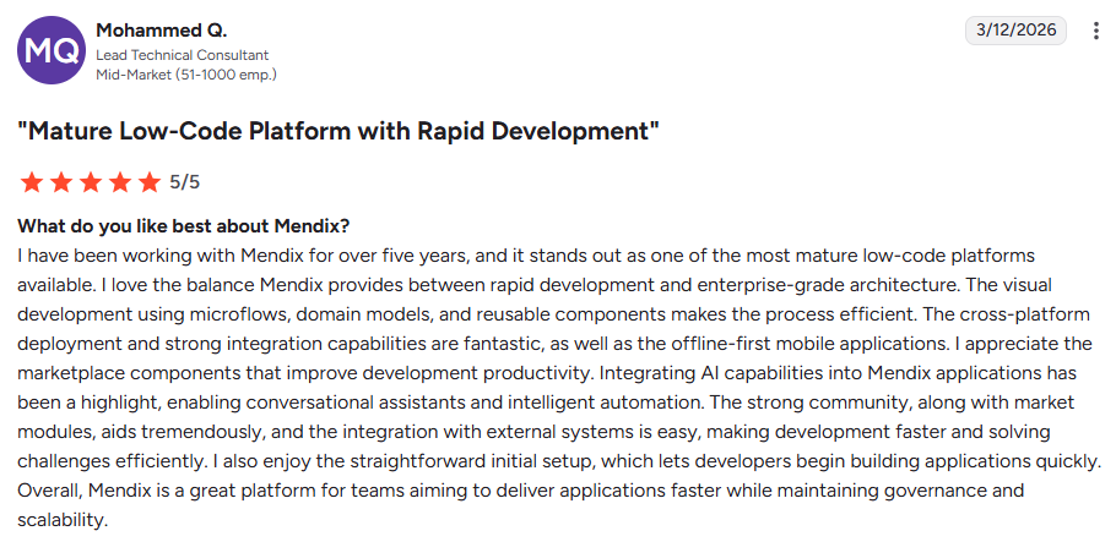
Reviewers frequently praise the visual modeling approach and fast development cycles. Multiple G2 users report reducing development timelines by 6–10x compared to traditional coding. The most cited drawback is pricing complexity, with per-user licensing making it hard to forecast costs as customer bases grow.
Pricing
Build department-wise applications with the Standard plan starting at €900/month.
Free trial details
Yes. Free plan available.
5. Blaze.tech
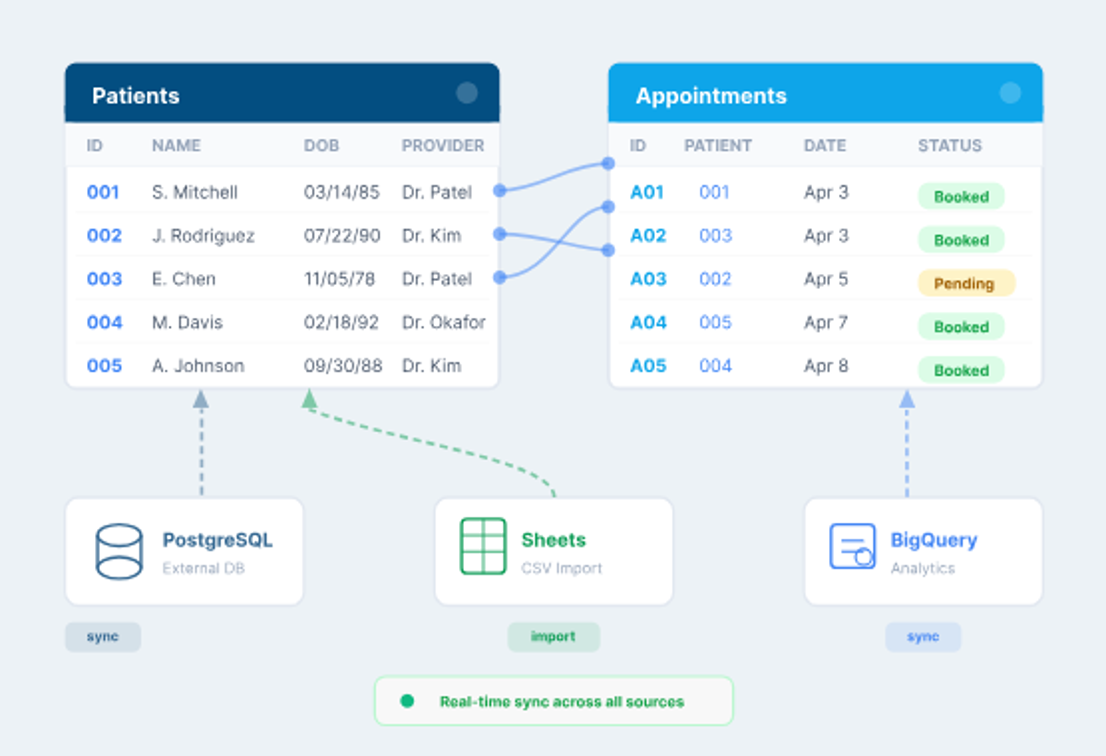
Blaze.tech is a no-code platform purpose-built for regulated industries like healthcare and finance. What sets Blaze apart is that SOC 2 Type 2 compliance and HIPAA certification come standard rather than requiring enterprise-tier upgrades. Fintech teams building client portals, onboarding workflows, and compliance dashboards find Blaze’s approach particularly valuable because security isn’t an afterthought.
Key features
- Compliance-first architecture: SOC 2 Type 2 and HITRUST e1 certifications are built into the platform from day one. Automatic audit logs, two-factor authentication, and role-based access controls are standard features.
- Dedicated implementation team: Blaze provides expert guidance throughout the development process, reducing the learning curve for fintech teams navigating complex regulatory requirements.
Pros
- Built-in SOC 2 Type 2 and HIPAA compliance without requiring enterprise-tier pricing.
- Plaid integration and payment gateway support (Stripe, Braintree, PayPal) for fintech data flows.
- Implementation team to help build and launch your first application.
Cons
- External user access (critical for customer-facing fintech apps) requires custom enterprise pricing.
- Smaller community and ecosystem compared to established platforms like Bubble or OutSystems.
Why we picked this company
Blaze makes this list because it solves the compliance problem that blocks most fintech teams from going to market. While platforms like Launchpad offer broader enterprise infrastructure, Blaze excels specifically at getting regulated applications live quickly with built-in security certifications that enterprise buyers trust.
What customers are saying
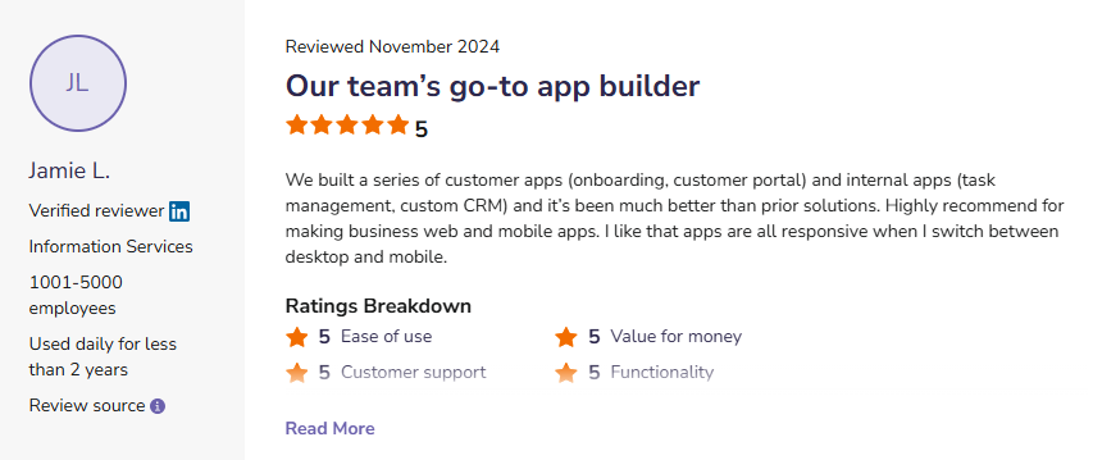
Capterra and SoftwareAdvice reviewers consistently highlight ease of use for non-technical teams and the quality of the implementation support team. Users in healthcare and finance appreciate the built-in compliance features. Some reviewers also note that pricing can feel restrictive for teams that need external user access.
Pricing
- Internal Plan: $1,500/month with unlimited apps and internal users.
- Enterprise Plan: Custom pricing.
Free trial details
No free plan available. Blaze offers free demos and consultations to help teams evaluate the platform before committing.
6. ProcessMIX
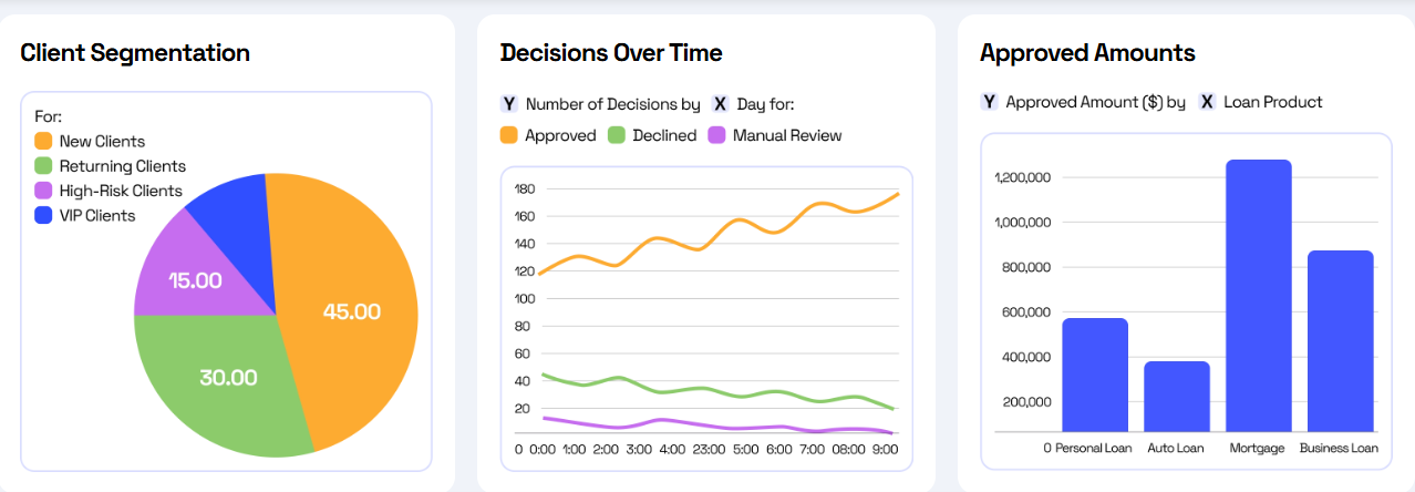
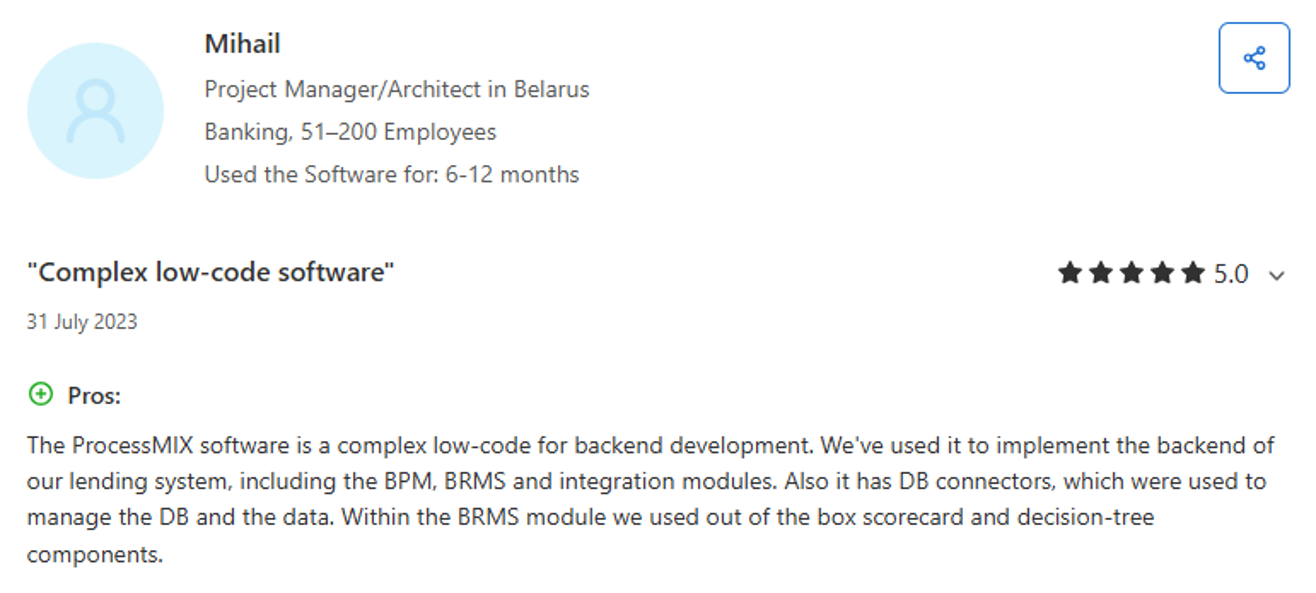
ProcessMIX is a low-code backend platform built specifically for banking and fintech software development. Unlike general-purpose no-code builders, ProcessMIX provides purpose-built components for credit scoring, loan origination, KYC workflows, risk modeling, and decision-table logic that fintech products require.
Banks, alternative lenders, and microfinance institutions use ProcessMIX to build and maintain complex financial decision engines.
Key features
- Financial decision engine: Built-in scorecards, decision tables, and PMML model support let fintech teams configure credit scoring, risk assessment, and lending rules through visual interfaces rather than custom code.
- Private GenAI deployment: Host AI models entirely within your infrastructure with no data leaving your environment, a critical requirement for financial institutions handling sensitive customer data.
Pros
- Purpose-built for banking and fintech with pre-made components for lending, KYC, and risk management.
- Decision tables and scorecard logic that financial teams can update without developer involvement.
- Private AI deployment option keeps sensitive financial data within your own infrastructure.
Cons
- Backend-focused platform that requires a separate frontend solution for customer-facing interfaces.
- Requires basic coding skills for advanced logic configuration, despite low-code positioning.
- Smaller market presence and community compared to mainstream no-code platforms.
Why we picked this provider
ProcessMIX earns its place because no other platform on this list offers the same depth of fintech-specific backend components. For software companies building lending platforms, credit scoring engines, or payment processing systems, ProcessMIX provides pre-built financial logic that would take months to develop from scratch on a general-purpose builder.
What customers are saying
Capterra reviewers praise the speed of development and the quality of fintech-specific components like decision tables and scorecards. Users report that the platform significantly accelerates backend development for financial applications. The primary feedback for improvement is around the expression editor’s formatting capabilities.
Pricing
Custom pricing based on project complexity for enterprise deployments.
Free trial details
Yes. Free trial available with no credit card required. Access to core features for evaluation purposes.
7. Caspio
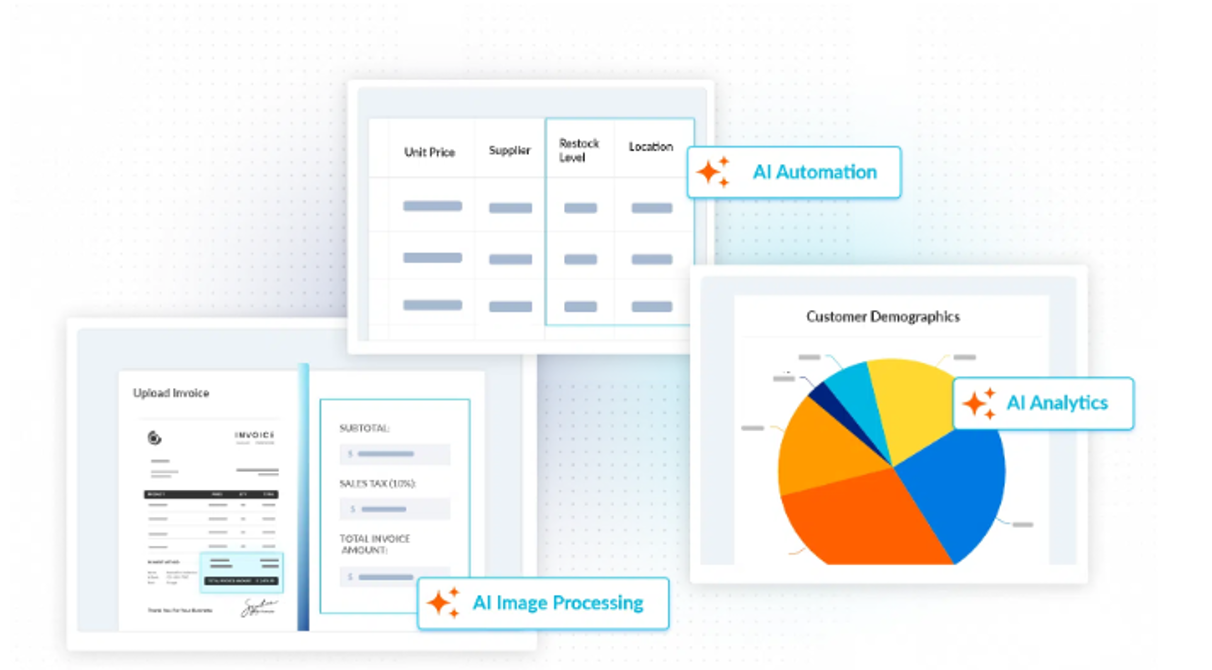
Caspio is a no-code database platform with 20+ years of market presence. It is trusted by over 15,000 organizations, including the American Red Cross and the US Department of Defense. For fintech teams, Caspio’s strength lies in handling large volumes of financial data with SOC 2 Type 2, HIPAA, and PCI DSS compliance built into higher-tier plans. The unlimited user model makes it particularly cost-effective for customer-facing financial applications.
Key features
- Enterprise database platform: Integrated Microsoft SQL Server database on AWS with field-level security, custom authentication, and data encryption for handling sensitive financial records at scale.
- Unlimited App Users: All pricing plans include unlimited end users, making Caspio highly cost-effective for fintech applications serving hundreds or thousands of financial institution clients.
Pros
- SOC 2 Type 2, HIPAA, PCI DSS, and GDPR compliance available for regulated fintech environments.
- Unlimited app users on all plans eliminate per-user costs that inflate pricing on competitor platforms.
- 20+ years of market presence with enterprise clients, including US government agencies.
Cons
- DataPage-based pricing can be confusing and restrictive for complex multi-screen fintech applications.
- Limited customization for highly specialized UI designs compared to platforms like Bubble.
Why we picked this company
Caspio makes this list for fintech teams that need a data-first platform with strong compliance credentials. The unlimited-user model offers a genuine cost advantage over platforms that charge per user, especially for B2B fintech products serving large numbers of financial institution employees.
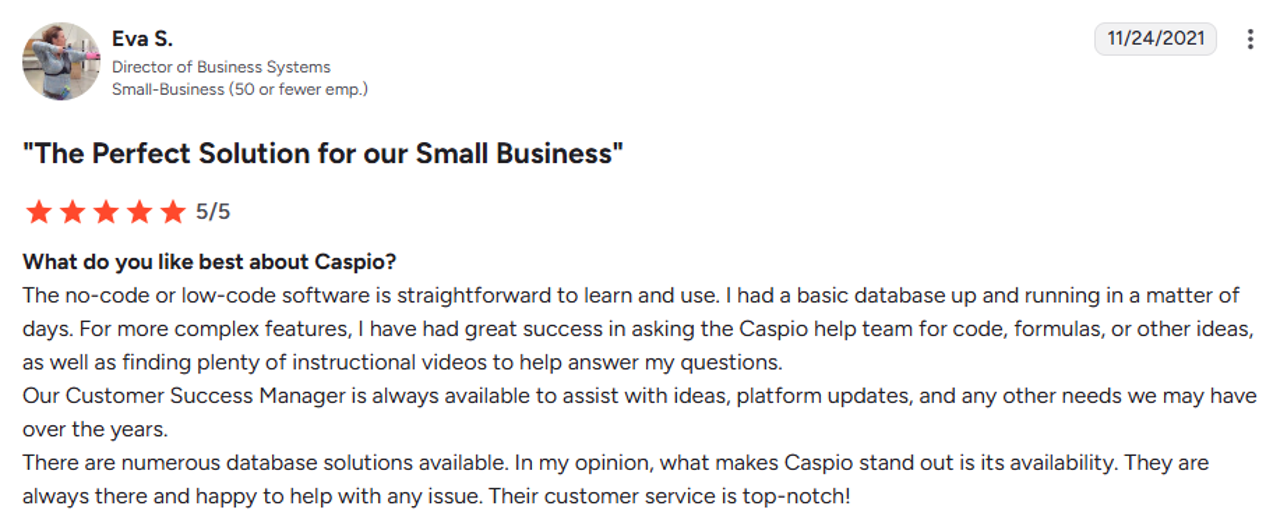
What customers are saying
G2 and Capterra reviewers praise Caspio’s reliability and the depth of its database capabilities. The unlimited user model is frequently cited as a key differentiator. Common complaints include inflexible annual billing, pricing that escalates with DataPage and API access requirements, and a learning curve for more complex application setups.
Pricing
- Team plan: $300/month, or $270/month billed annually
- Business: $600/month.
- Enterprise: Custom pricing.
Free trial details
Yes. 14-day free trial with full platform access. No credit card required.
8. FlutterFlow
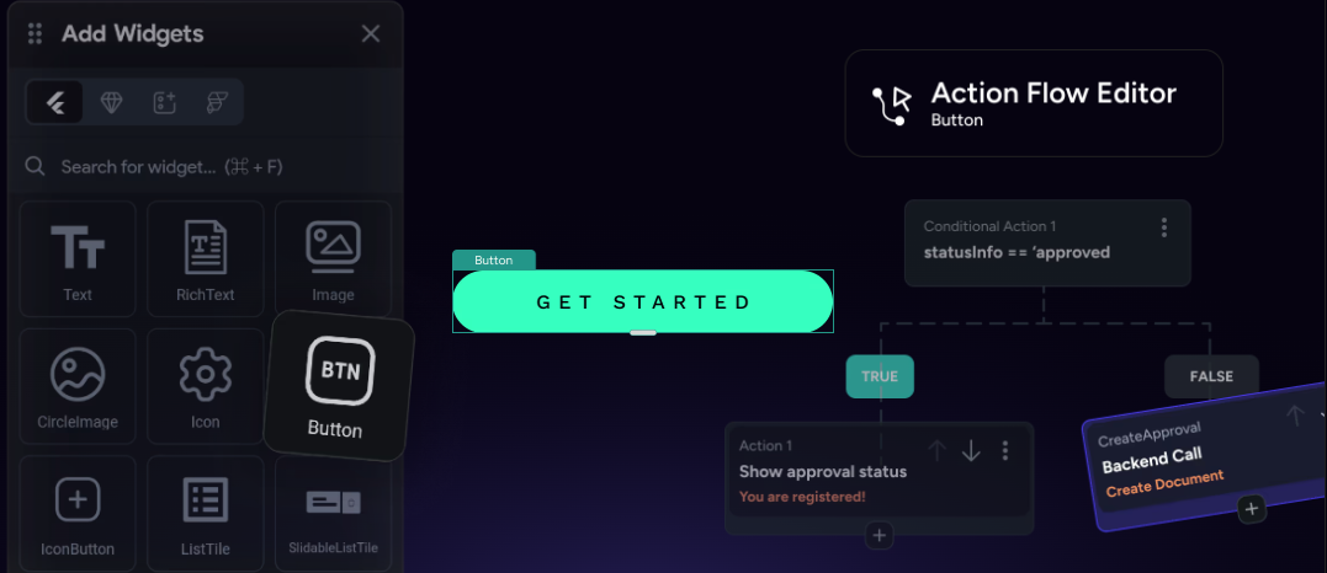
FlutterFlow is a low-code builder designed for mobile-first applications that compile to native iOS and Android using Google’s Flutter framework. Fintech companies building consumer-facing mobile banking, payment, or investment apps benefit from FlutterFlow’s native performance and direct app store publishing. The platform also supports web deployment from the same codebase.
Key features
- Native mobile compilation: Applications compile to native Flutter code for iOS and Android, delivering the performance that consumer-facing fintech mobile apps demand, rather than relying on web wrappers.
- Full code export: Export complete source code at any time, giving fintech teams the freedom to continue development in a traditional environment if platform limitations are reached.
Pros
- True native mobile app output with direct publishing to Apple App Store and Google Play.
- Full code export prevents vendor lock-in and gives engineering teams long-term flexibility.
- Firebase and Supabase backend integration for real-time data handling in financial applications.
Cons
- Requires some technical knowledge; not truly no-code for advanced features and custom logic.
- No built-in compliance certifications; security hardening is entirely your responsibility.
- Frontend-only builder that requires a separate backend solution for complex fintech business logic.
Why we picked this company
FlutterFlow makes the list for fintech teams that prioritize native mobile performance and need app store distribution. While it doesn’t offer the enterprise compliance infrastructure of platforms like Launchpad or Blaze, the code export capability ensures you’re never locked into the platform as your fintech product scales.
What customers are saying
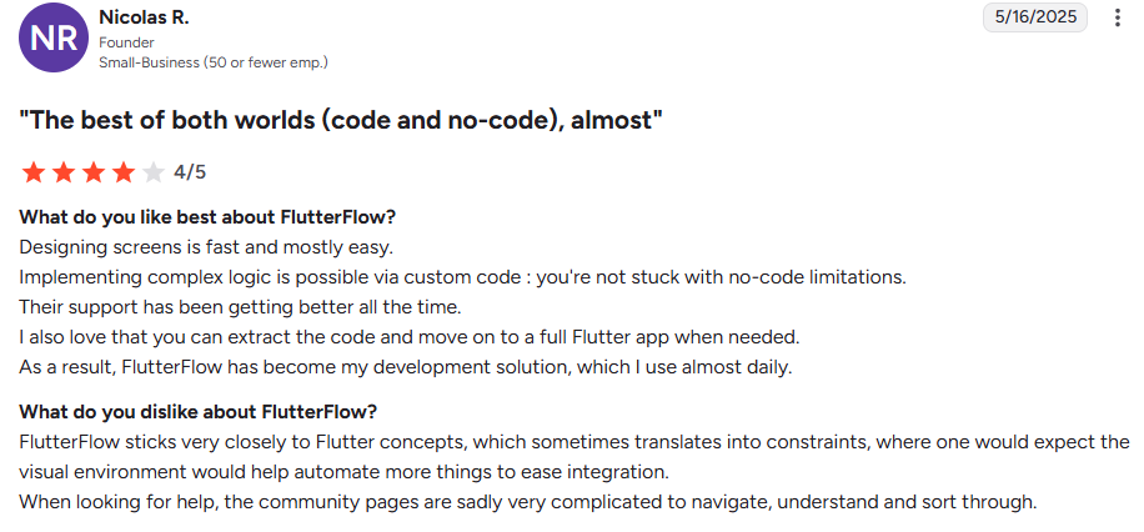
Users praise the speed of going from design to published mobile app and the quality of the Flutter code output. Blaze.tech’s FlutterFlow review notes that the 2026 pricing changes increased costs (Basic is now $39/month, up from $30). Some users also report that complex financial logic requires custom coding that goes beyond the visual builder’s capabilities.
Pricing
- Free: 2 projects, preview only, no publishing.
- Basic: $39/month.
- Growth: $80/month.
- Business: $150/month.
Free trial details
Yes. Free plan available with no time limit. Includes Firebase/Supabase integration and design preview. No credit card required.
9. DrapCode
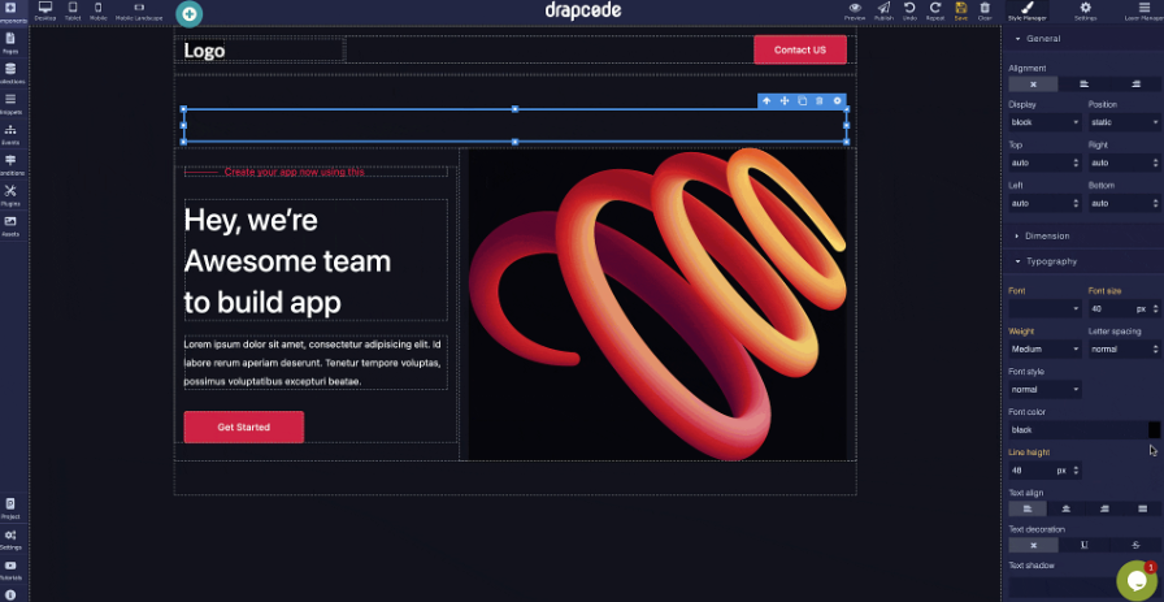
DrapCode is a no-code web app builder with growing traction in fintech and healthcare. The platform supports SOC 2 Type 2 compliant development, loan workflow construction, borrower portal creation, and payment gateway integrations. What differentiates DrapCode is its full source code export capability paired with fintech-specific features at an accessible price point.
Key features
- Fintech-specific workflows: Pre-built support for loan workflows, borrower portals, credit bureau integrations, and regulated financial system development that accelerate fintech product creation.
- Complete code export: Export the full source code and database of your application at any time. Deploy to AWS, Azure, Google Cloud, or any private server with zero ongoing DrapCode dependency.
Pros
- SOC 2 Type 2 compliant development with fintech-specific features at the lowest starting price on this list.
- Full code export with zero DrapCode dependency after export, eliminating vendor lock-in.
- Payment gateway integrations (Stripe, Razorpay, PayPal) and built-in credit bureau connectivity.
Cons
- Smaller, newer platform with a less mature ecosystem than that of established competitors.
- UX and naming conventions can be unintuitive according to user reviews on Capterra.
- Web app focus only, with no native mobile app compilation for consumer-facing fintech products.
Why we picked this company
DrapCode earns its spot as the choice for fintech teams that want code ownership from the start. At $45/month, it offers SOC 2-compliant development and fintech-specific workflow templates. It also provides the most accessible entry point for software companies building regulated financial applications, as well as an exit strategy from the platform.
What customers are saying
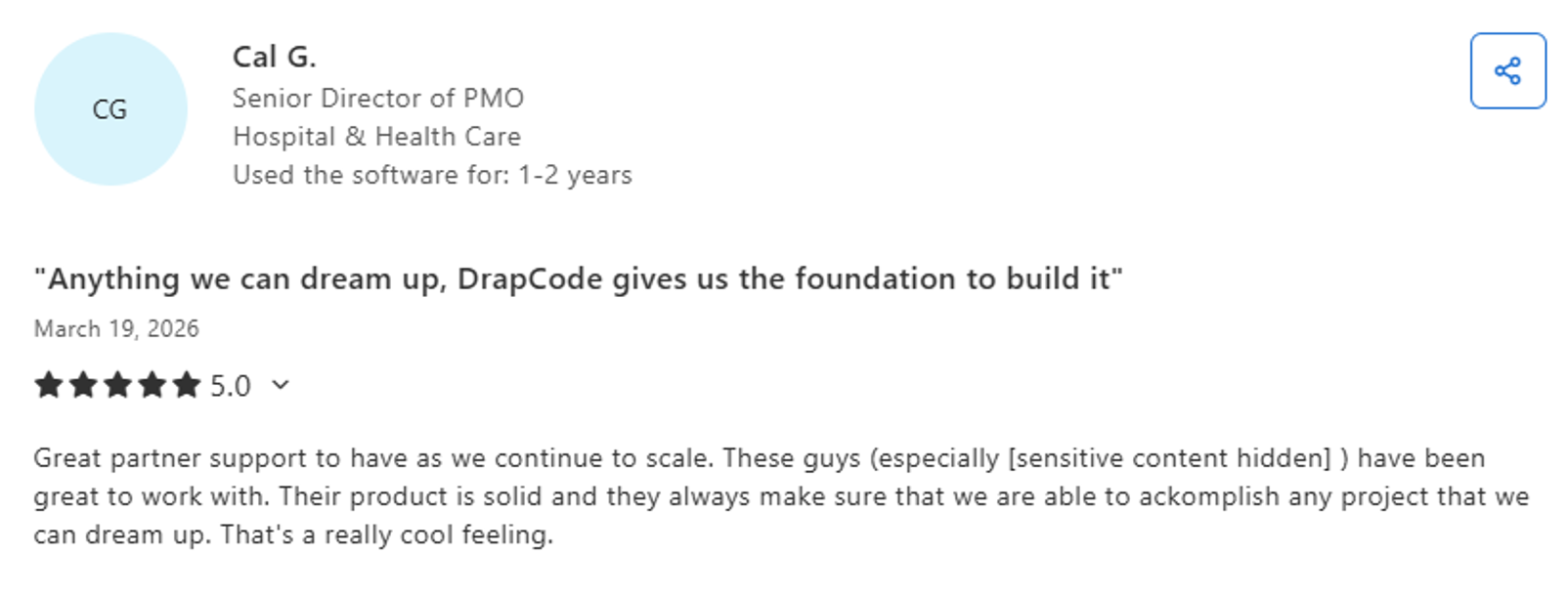
Capterra and SoftwareAdvice reviewers highlight the dedicated support team and the platform’s ability to handle complex web applications. Healthcare and fintech users appreciate the compliance-ready development environment. Some reviewers also note that the UX could be more intuitive and that advanced features sometimes require custom development support from the DrapCode team.
Pricing
- Free: Limited features for exploration.
- Launch: $50/month for basic web app development.
- Growth: $150/month with enhanced team collaboration, custom SSL, and code export.
- Scale: $650/month.
- Enterprise: Custom.
Free trial details
Yes. Free plan available with no time limit. Paid plans include access to the visual builder and core features. No credit card required to start.
10. Appian
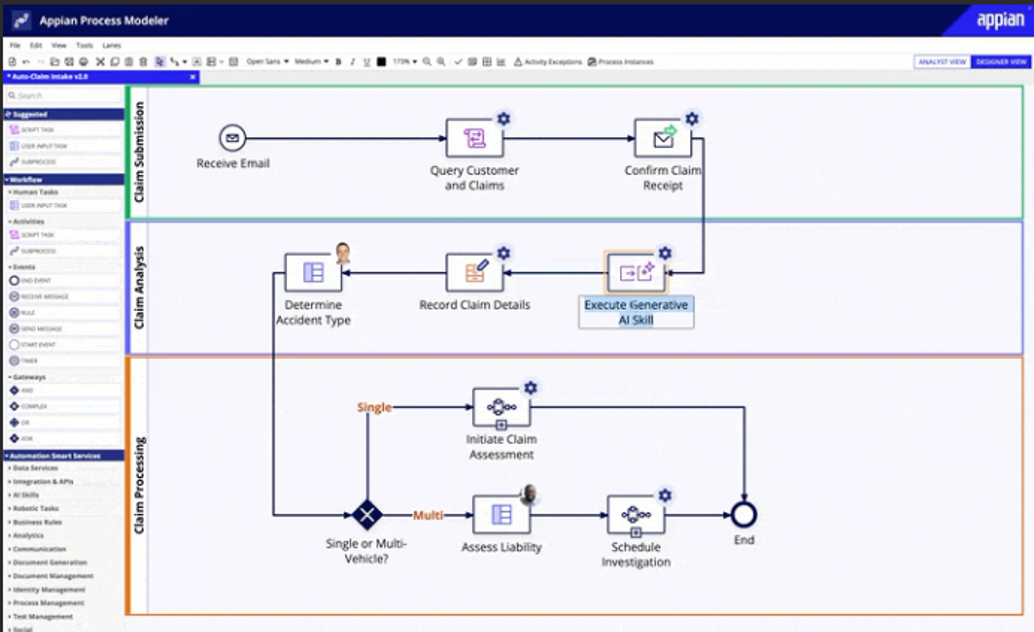
Appian is a low-code automation platform that dominates in complex business process management for financial services. Major banks and insurance companies use Appian for compliance workflows, case management, and fraud detection systems. The platform combines low-code development with built-in RPA and AI, making it uniquely suited for fintech products that automate intricate multi-step financial processes.
Key features
- Unified process automation: Combines low-code development, RPA bots (up to unlimited on Premium), and AI in one platform for automating complex financial processes like claims processing, fraud detection, and regulatory reporting.
- Data Fabric Architecture: Connects and unifies data from multiple sources without migration, allowing fintech applications to pull from core banking systems, CRMs, and external APIs through a single interface.
Pros
- SOC 2 Type 2, ISO 27001, and FedRAMP certifications make it trusted by government agencies and major banks.
- Built-in RPA and AI Copilot automate processes that pure no-code builders can't handle.
- Proven track record in financial services with deployment flexibility (cloud, on-premises, hybrid).
Cons
- Opaque pricing requires a sales engagement; no published price tiers for production use.
- Per-user, per-app licensing model with custom quotes makes cost forecasting extremely difficult.
- Complex platform with a significant learning curve that requires dedicated Appian developers.
Why we picked this company
Appian makes this list because it handles the complexity of process automation that simpler no-code builders cannot. For fintech companies building products that require multi-step approval chains, regulatory reporting automation, or fraud detection pipelines, Appian’s combination of BPM, RPA, and AI is unmatched. For teams that don’t need that depth, Launchpad delivers comparable workflow orchestration at a more predictable cost.
What customers are saying
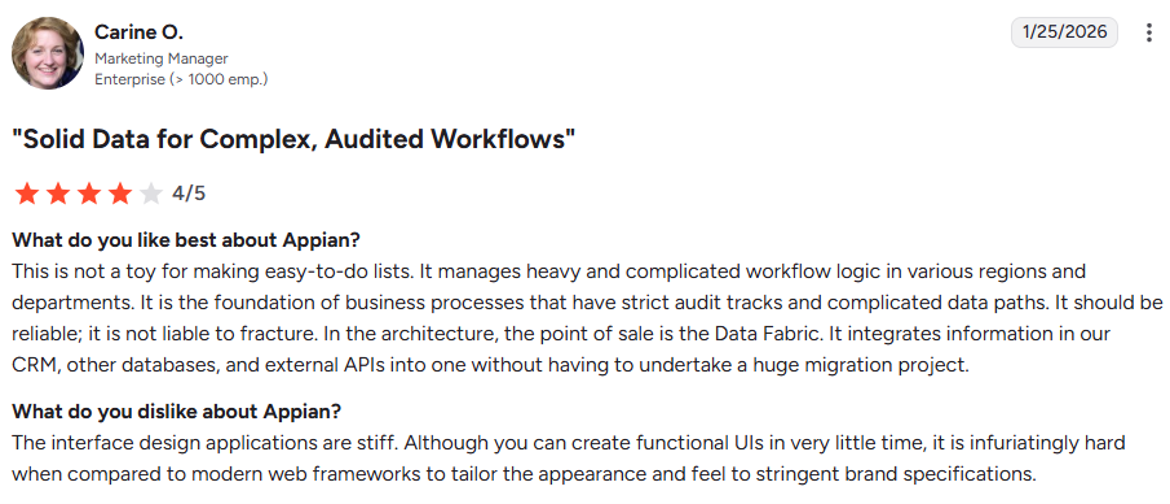
Capterra and G2 reviewers praise Appian’s robust workflow capabilities and rapid development speed. Users frequently mention the platform's strength for process-heavy applications in banking and insurance. The most common criticism is the pricing model, which multiple reviewers describe as expensive and inflexible, particularly for smaller organizations.
Pricing
- Community Edition: Free for up to 15 users (non-production).
- Standard, Advanced, and Premium tiers: Custom pricing.
Free trial details
Yes. Free Community Edition available for up to 15 users.
Plan comparison table
Here’s a side-by-side view of pricing, free access, and pricing models for every platform on this list:
Platform | Free Plan / Trial | Starting Price | Mid-Tier | Enterprise |
Launchpad | Free Explore tier | $900 / month; $500 / month for eligible startups | Custom (Accelerate) | Custom |
Bubble | Free plan (no live app) | $29 / month (web) | $119 / month (Growth) | Custom |
OutSystems | 10-day trial | $36,300 / year | Add-ons available | Custom |
Mendix | Free plan | €900 /month | $998 / month (Standard) | Custom |
Blaze.tech | Demo only | $1,500 / month (Internal) | Custom (Enterprise) | Custom |
ProcessMIX | Free trial | Custom | Custom | Custom |
Caspio | 14-day trial | $300 / month (Team) | $600 / month (Business) | Custom |
FlutterFlow | Free plan | $39 / month (Basic) | $80 / month (Growth) | Custom |
DrapCode | Free plan | $50 / month (Starter) | Growth / Business tiers | Custom |
Appian | Free (15 users) | Custom (Standard) | Custom (Advanced) | Custom (Premium) |
How we selected these 10 no-code and low-code app builders
Choosing a no-code / low-code builder for fintech is different from evaluating general-purpose platforms. Marketing demos show polished interfaces but regulated financial software demands verified infrastructure underneath. We selected these 10 platforms based on the following criteria that fintech software companies cannot compromise on:
- We reviewed publicly available information about each platform's security, compliance, deployment, pricing and development capabilities.
- Assessed fintech-specific integration depth, including payment gateway support, banking API connectivity, and KYC/AML workflow capabilities.
- Evaluated production readiness for commercial software distribution, not just internal tool creation or MVP prototyping.
- Confirmed multi-tenant architecture support for serving multiple financial institution clients from a single codebase.
- Cross-referred user reviews on G2, Capterra, and SoftwareAdvice for real-world feedback from fintech and financial services teams.
How to choose the right no-code / low-code app builder for fintech
If you’re not sure which no-code or low-code app builder for fintech is the right one for you, here are the factors to take into account when choosing one:
Define your compliance requirements first
Map every regulatory requirement your fintech product must meet. If your clients are banks, SOC 2 Type 2 is often expected by enterprise financial services buyers. However, if you handle payment data, PCI DSS compliance is non-negotiable.
Assess production readiness vs. prototyping
Many no-code platforms excel at creating demos but struggle with production workloads. Ask whether the platform output can pass a security review from a financial institution buyer without a complete rebuild. Platforms that require you to rewrite for production after prototyping cost you the same work twice.
Evaluate multi-tenant and scalability needs
B2B fintech products serve multiple financial institution clients from a single platform. If your chosen builder doesn’t support multi-tenant architecture natively, you’ll spend months engineering tenant isolation, data segregation, and per-client configuration that enterprise buyers expect.
Consider total cost of ownership
The sticker price of a platform is rarely the full cost. Factor in compliance add-ons, per-user licensing, workload overage charges, and the engineering time needed to fill gaps the platform doesn’t cover natively. A platform with a higher monthly subscription but built-in enterprise security, governance, and compliance capabilities may ultimately cost less than a lower-priced builder that requires substantial additional engineering and third-party services to meet enterprise requirements.
Build production-ready fintech software with Launchpad
The fintech companies that win enterprise contracts are the ones that pass security reviews on the first attempt, not the ones that ship the fastest prototype.
Launchpad delivers enterprise-grade compliance, multi-tenant infrastructure, and AI-powered workflow orchestration. So, your team focuses on the financial logic that differentiates your product rather than on rebuilding the infrastructure every fintech company needs.
Sign up for free today and start building production-ready fintech applications on a platform backed by more than four decades of Pega's enterprise workflow expertise.
Frequently Asked Questions
What compliance certifications should a fintech no-code/low-code builder have?
At a minimum, you need SOC 2 Type 2 for enterprise trust and data security. PCI DSS if your product handles payment card data. HIPAA applies if you serve healthcare-adjacent financial services. Meanwhile, ISO 27001 and GDPR add credibility for international buyers.
Can I build production-ready fintech SaaS with no-code/low-code?
Yes, but only with the right platform. Production-ready fintech software requires built-in compliance, multi-tenant architecture, and enterprise-grade infrastructure. Launchpad provides these natively. While Prototype-focused builders like Bubble or Lovable typically require significant rework before passing enterprise security reviews.
What’s the difference between no-code and low-code for fintech?
No-code platforms let non-technical users build through visual interfaces. In comparison, low-code platforms require some programming but offer deeper customization. For fintech, the distinction matters less than whether the platform delivers compliance, security, and production readiness.
How do no-code and low-code platforms handle PCI DSS compliance?
Caspio and OutSystems offer PCI DSS as a built-in infrastructure-level certification. Others leave PCI compliance to the application builder. If your fintech product processes payment card data, verify the platform’s compliance rather than relying on general security claims.
About the Author
The Launchpad Team empowers companies to build enterprise-grade, AI-powered software that automates work and delivers measurable outcomes—helping them move from idea to market faster.